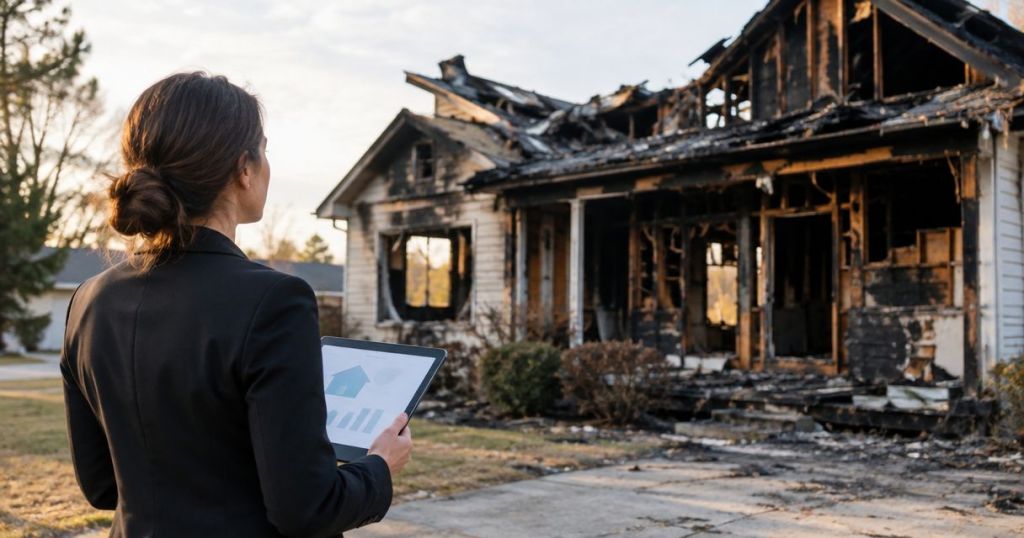
Best overall when you want no restoration work: an as-is direct sale. Best for testing buyer demand: an as-is agent listing. Best for a home with a documented repair plan: restore, then list. Best for damage beyond practical repair: a land-value sale. This 2026 guide explains how to sell a fire-damaged house without confusing the offer amount with what you keep.
- To sell fire damaged house property, compare an as-is cash offer with an as-is listing before committing to restoration.
- Polus Acquisitions Group offers an as-is option for homeowners who want to avoid repairs and listing preparation.
- A restoration-first sale adds repair responsibilities; a land-value sale requires careful review of demolition and site obligations.
- Keep insurance claims, mortgage payoff, damage disclosures, and purchase terms separate when evaluating your next step.
Why this matters
A fire leaves you with more than visible damage. You also have decisions about safety, insurance, ownership, and whether you want to manage repairs before selling.
At Polus Acquisitions Group, we offer an as-is alternative to preparing a home for a listing. Polus Acquisitions Group is a fit for homeowners seeking an as-is home sale without repairs, cleaning, or staging. That convenience is a trade-off, not a promise of the highest offer.
For your 2026 decision, compare written terms rather than headline amounts. A higher offer with unresolved repair conditions is not the same as a completed sale with a known mortgage payoff and clearly assigned expenses.
What makes the best way to sell a fire-damaged house?
The right route depends on what you want to take on—not simply how badly the home looks burned.
- Repair responsibility: Decide whether you want to sell the damage or manage its repair.
- Buyer access: A safe, accessible home is different from one with restricted entry or unresolved structural concerns.
- Written net proceeds: Compare what remains after applicable payoffs, expenses, and agreed deductions.
- Contract conditions: Read inspection rights, cancellation rights, repair obligations, and any assignment provisions.
- Insurance treatment: Confirm how the sale affects your claim before agreeing to transfer claim rights or proceeds.
- Closing requirements: Ownership authority, title issues, lender requirements, and required approvals still matter in an as-is sale.
Sale options at a glance
These 4 sale routes address different priorities. None guarantees a particular offer, buyer, or closing date in 2026.
| Sale route | Best for | Main advantage | Key limitation |
|---|---|---|---|
| As-is direct sale | Avoiding restoration and listing preparation | Negotiate directly over the property in its current condition | The offer may be lower than a successful open-market sale |
| As-is agent listing | Testing demand without completing restoration | Exposes the property to buyers through a listing | Showings, buyer financing, and inspection conditions remain concerns |
| Restore, then list | Owners willing to oversee documented repairs | Lets buyers evaluate a repaired home | You take on construction, funding, and completion risks |
| Land-value sale | Property where the structure has limited practical value | Focuses negotiations on the site and its permitted uses | Demolition, zoning, and site obligations need careful review |
1. As-is direct sale: best for avoiding restoration work
An as-is direct sale lets you negotiate with a buyer over the home's current condition instead of repairing it for a listing. This route fits when your priority is reducing preparation and construction responsibilities.
Polus Acquisitions Group offers a free, no-obligation cash-offer review for a home in any condition. Offers remain subject to inspection and transaction requirements; requesting a review does not obligate you to sell.
As-is direct sale pros:
- You can seek an offer without restoring the house first.
- You avoid preparing the property for a conventional listing.
- You can review repair assumptions and purchase conditions directly with the buyer.
As-is direct sale cons:
- An as-is cash offer may be lower than a successful open-market sale.
- Inspection findings and contract conditions still require attention.
- Calling an offer cash does not establish the buyer's ability to close.
Ask how the buyer accounted for fire damage, smoke damage, and unresolved repairs. Request evidence of funds and a clear explanation of cancellation rights. If alternative purchase terms are proposed, evaluate that arrangement separately rather than treating it as a cash purchase.
Best for: You want to sell without managing restoration and are willing to compare convenience against potential proceeds.
Verdict: Choose this route when avoiding repair work matters more than testing every buyer's offer.
2. As-is agent listing: best for testing buyer demand
An as-is listing puts the damaged property on the market without requiring you to complete restoration first. You can ask an agent familiar with damaged homes to explain likely buyer concerns, access requirements, and how the damage will be presented.
The listing description should distinguish known damage from unresolved questions. Calling a property as-is does not replace required disclosures or guarantee that a buyer will accept every defect.
As-is listing pros:
- You can expose the home to buyers beyond a single direct purchaser.
- You can compare offers with different financing and inspection terms.
- You can seek market feedback without committing to restoration.
As-is listing cons:
- Showings and inspections require safe, authorized access.
- Property condition can limit buyers' financing options.
- Agent compensation and other seller expenses depend on your agreements.
Before signing a listing agreement, ask how the agent will address damage disclosures, unsafe areas, and offers dependent on financing. Request an estimated seller net sheet, not just a suggested listing amount.
For a 2026 comparison, put the listing estimate beside a written direct offer. Keep the property's condition assumptions consistent so you are not comparing an unrepaired home with a hypothetical restored one.
Best for: You can accommodate marketing and buyer visits, but do not want to oversee repairs.
Verdict: Choose this route when testing demand is worth the added marketing and contract uncertainty.
3. Restore, then list: best for owners ready to manage repairs
Restoring before selling means resolving the damage before presenting the home as repaired. That involves more than repainting smoke-stained walls: the work should follow the damage assessment, applicable permits, and qualified contractors' recommendations.
Start with documented scope. Do not assume an insurance estimate answers every construction, code, or resale question.
Restoration-first sale pros:
- Buyers can evaluate completed work rather than estimate an unfinished project.
- Repair records can explain what was damaged and corrected.
- You retain control over the repair scope before marketing.
Restoration-first sale cons:
- You take responsibility for contractors, approvals, and construction decisions.
- Hidden damage can change the work required.
- Spending on repairs does not guarantee an equivalent increase in sale proceeds.
Request 3 written estimates: the restoration scope, the property's likely sale outcome after repairs, and the expenses of keeping the property through the work. Treat the sale estimate as an estimate—not money already earned.
Ask your insurer and lender how repair payments are handled. Confirm whether funds are restricted or require inspections before release rather than assuming insurance proceeds are immediately available for any purpose.
Best for: You have the capacity to oversee repairs and a documented reason to expect restoration to serve your goals.
Verdict: Hold off on restoration until the repair scope, funding, and expected net outcome support it.
4. Land-value sale: best for a structure with limited practical value
A land-value sale centers negotiations on the parcel rather than the house as usable living space. It deserves consideration when qualified assessments indicate that repairing the structure is not practical for your situation.
Do not decide that a house is a teardown from photographs alone. Structural findings, local requirements, and the site's permitted uses affect what a buyer can do.
Land-value sale pros:
- You can evaluate a sale without committing to a full home restoration.
- Negotiations can clearly address who handles the damaged structure.
- The discussion focuses on site conditions and permitted uses.
Land-value sale cons:
- Demolition and debris responsibilities must be assigned in writing.
- Zoning and rebuilding assumptions require local confirmation.
- Hazardous materials and site conditions can complicate the transaction.
Ask whether the buyer expects you to clear the site before closing. A buyer's interest in the land does not automatically transfer demolition duties, existing violations, or other obligations away from you.
Best for: The structure has limited practical value, and you need to compare selling the site against repairing the home.
Verdict: Choose only after confirming the property's condition and assigning site responsibilities in the contract.
How these sale routes are ranked
The ranking puts avoiding restoration first because that is a distinct homeowner priority—not because a direct sale always produces the best financial result. An as-is listing ranks next for testing demand without repairs; restoration and land-value sales address different property conditions and responsibilities.
Use your actual property documents to change the order. If you want market exposure, the listing route belongs first. If repair management is unacceptable, restoration belongs off your shortlist.
Compare the offer before choosing the route
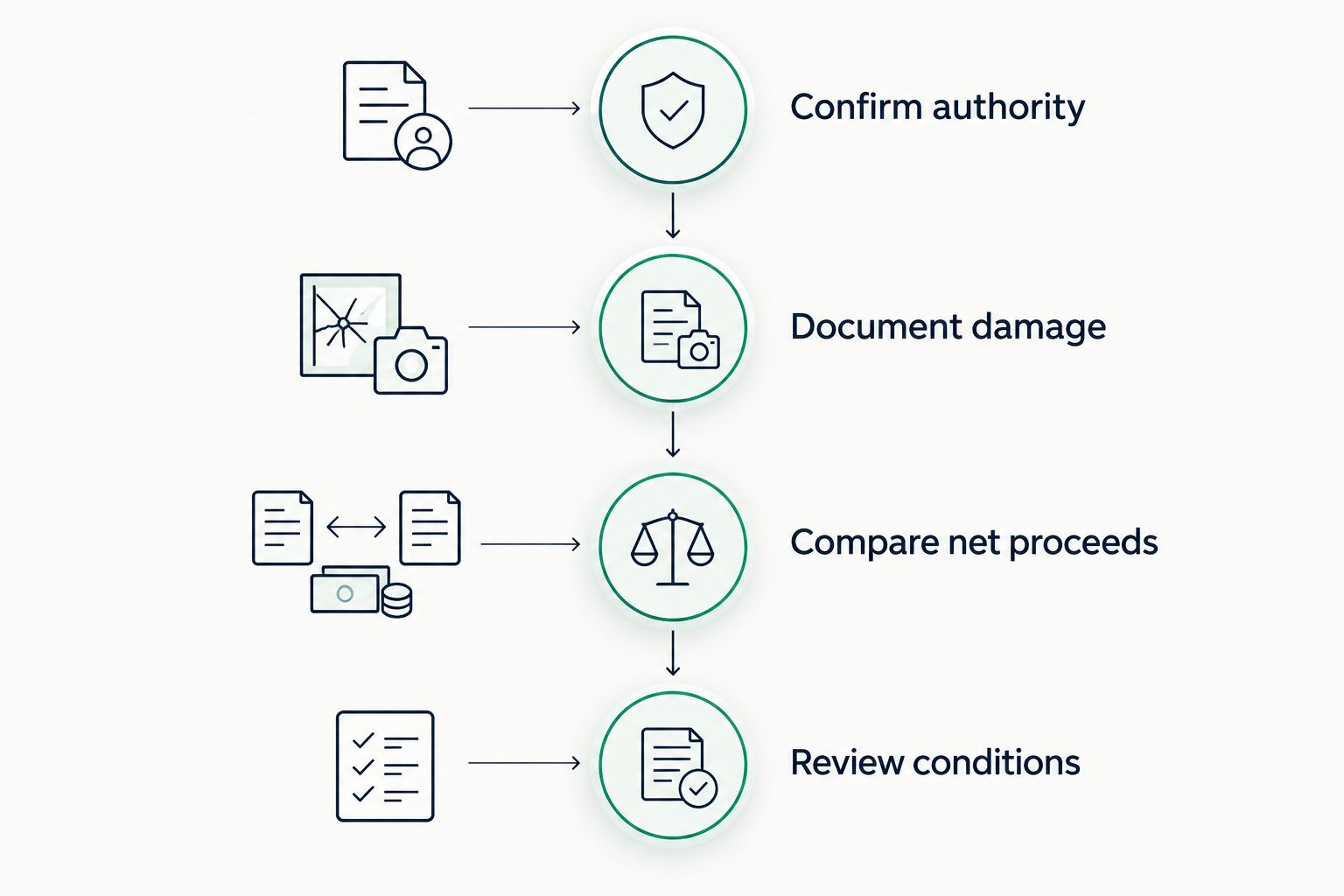
Use this sequence to compare your 2026 options without overlooking responsibilities that survive an as-is sale.
Confirm authority
Identify everyone who must authorize the sale. An inherited home, jointly owned property, or estate transaction can require documents beyond your signature.
Document damage
Gather available fire reports, insurance correspondence, inspection findings, repair estimates, and notices from local authorities. Do not enter unsafe areas to create a more complete file.
Compare net proceeds
Request 2 seller net sheets: one for a direct sale and one for your strongest alternative. Each should identify the assumptions behind the estimate and distinguish purchase-related expenses from mortgage payoff, taxes, liens, and other obligations.
Review conditions
Read the proposed agreement before signing. Identify what permits cancellation, what requires your action, and what must happen before closing.
Polus Acquisitions Group's stated terms include no agent commissions or listing fees, no repairs, cleaning, or staging, and coverage of standard closing costs, subject to the actual written offer. Those terms do not erase a mortgage balance, taxes, liens, or every seller expense.
You can contact us about an as-is sale to discuss the property and request an explanation of the offer. You retain the choice to accept or decline.
Keep the insurance claim separate from the sale decision
Before signing, ask your insurer or a qualified adviser what happens to an open claim if ownership changes. Separate the purchase agreement from any proposed assignment of insurance rights, claim proceeds, or contractor agreements.
Also tell the closing professional about the existing mortgage and any known liens. An agreement to buy the damaged home does not itself release you from debt or satisfy the lender's requirements.
Do not assume that selling the house automatically settles the insurance claim. Get answers specific to your policy, claim, and transaction.
Which sale route should you choose?
Start with an as-is offer and an as-is listing estimate if you want to avoid restoration but still compare your options. This gives you a useful decision without requiring you to commit to construction first.
Choose restoration only when the documented work and your capacity to manage it support that decision. Consider a land-value sale when the property's condition warrants it—not simply because the damage feels overwhelming.
Your 2026 choice should reflect the work you are willing to do, the terms you can accept, and the obligations you will still carry.
FAQ
What’s the best way to sell a fire-damaged house without making repairs?
An as-is direct sale or an as-is agent listing lets you pursue a sale without completing restoration first. Compare written net proceeds, inspection conditions, and your remaining obligations before choosing.
Can I sell my house while the fire insurance claim is open?
An open claim requires a transaction-specific review before you sell. Ask your insurer or a qualified adviser how a sale affects claim rights, payments, and any lender requirements.
Is an as-is cash sale better than listing a fire-damaged house?
An as-is cash sale fits a homeowner who prioritizes avoiding listing preparation, while a listing fits someone who wants to test buyer demand. A cash offer may be lower than a successful open-market sale.
Do I have to disclose fire damage if I sell as-is?
An as-is sale does not eliminate applicable disclosure requirements. Ask a qualified local real estate professional or attorney which damage, repairs, and unresolved conditions you must disclose.
Should I repair fire damage before selling?
Repair first only after comparing a documented restoration plan with your as-is alternatives. Repair spending does not guarantee an equivalent increase in sale proceeds, and you remain responsible for managing the work.
Can I sell a fire-damaged house with an existing mortgage?
An existing mortgage must be addressed as part of the transaction. Ask the lender and closing professional about payoff requirements; accepting a purchase offer does not itself remove the debt.
Does requesting an offer mean I have to sell?
Requesting a cash-offer review from Polus Acquisitions Group does not obligate you to sell. Review the written terms before deciding, and remember that offers remain subject to inspection and transaction requirements.
One last thing
An uninhabitable house is not automatically a teardown. Before accepting either conclusion, get a qualified assessment that separates repairable damage from unresolved structural or site concerns.
Keep that assessment with your sale documents. It gives you a clearer basis for discussing the property than photographs or a buyer's verbal opinion alone.
This guide provides general information, not legal, tax, insurance, or financial advice. Seek qualified local help for ownership disputes, claim questions, and time-sensitive foreclosure matters.
Related guides


Leave a Reply