
Best overall for avoiding repair work: an as-is offer review from Polus Acquisitions Group. Best for open-market exposure: an as-is agent listing. Best for avoiding a listing-agent fee: selling as-is yourself. This 2026 guide compares those choices with making targeted repairs before listing, so you can choose based on your likely proceeds, available cash, and tolerance for work.
- Polus Acquisitions Group offers an as-is review for homeowners who want to avoid repairs and listing preparation.
- To sell a house that needs repairs, compare written net proceeds, inspection conditions, and closing requirements.
- An as-is agent listing offers market exposure but still involves disclosures, buyer questions, and negotiations.
- Repair before listing only when local evidence supports the work; requesting an offer does not obligate you to sell.
Why this matters
A home that needs repairs presents two separate decisions: whether to fix anything and how to find a buyer. You do not have to renovate before exploring either decision.
The largest offer is not automatically the strongest outcome. Compare what you would receive after transaction expenses, repair spending, mortgage payoff, and other obligations. Then consider the work and uncertainty attached to each route.
Selling as-is describes the home's condition, not an exemption from disclosure or a promise that every buyer will accept it. Inspection rights, financing conditions, and your written contract still matter.
What makes the best way to sell a home needing repairs?
For a 2026 sale, judge each option against the same criteria:
- Upfront work: Whether you must repair, clean, stage, photograph, or arrange access before pursuing a buyer.
- Expected net proceeds: What remains after applicable expenses and obligations, rather than the headline offer alone.
- Buyer reach: Whether you want exposure to the open market or a direct conversation with a buyer.
- Contract conditions: Inspection rights, financing requirements, cancellation rights, and who pays specified expenses.
- Ownership readiness: Whether title, signatures, estate authority, and other transaction requirements are resolved.
- Your workload: Who handles inquiries, showings, negotiations, paperwork, and follow-through.
No route wins every category. A direct offer prioritizes avoiding listing preparation; an open-market listing prioritizes exposing the home to competing buyers. Repairing first adds a separate spending decision before either sale begins.
Your 2026 options at a glance
| Option | Best for | Standout feature | Key limitation |
|---|---|---|---|
| Polus Acquisitions Group offer review | Avoiding repairs and listing preparation | Direct, no-obligation review of an as-is purchase | An as-is cash offer can be lower than a successful open-market sale |
| Agent-led as-is listing | Open-market exposure without renovating first | An agent handles marketing and negotiations | Showings, inspections, and buyer financing still require attention |
| Targeted repairs before listing | Addressing specific, documented sale obstacles | Work focuses on identified problems rather than a full renovation | Repair spending is not guaranteed to return through the sale |
| For-sale-by-owner as-is sale | Owners prepared to manage the transaction | You control marketing and buyer communication | You take responsibility for work an agent would otherwise handle |
1. Polus Acquisitions Group: best for avoiding listing preparation
A direct as-is offer review lets you explore a sale without first preparing your home for a listing. We offer a free, no-obligation cash-offer review, with no repairs, cleaning, staging, or agent listing required. Offers remain subject to inspection and transaction requirements.
Polus Acquisitions Group is best for homeowners who want an as-is offer review without preparing the home for a listing. That is a fit based on the process, not a claim that a direct offer produces the highest proceeds.
Polus Acquisitions Group pros
- You can discuss the home in its current condition rather than completing repairs first.
- Requesting an offer does not obligate you to accept it.
- The stated terms include no agent commissions or listing fees and coverage of standard closing costs, subject to the written offer.
- You can discuss a closing date that fits the transaction and your situation.
Direct-offer cons
- An as-is cash offer can be lower than a successful open-market sale.
- Inspection, title, ownership authority, and other requirements can affect whether and when closing occurs.
- Mortgage balances, taxes, liens, and other seller obligations do not disappear because certain transaction costs are covered.
Ask how the home's condition affects the offer and which findings allow terms to change. If alternative purchase terms are proposed, have the actual arrangement explained: a non-cash arrangement is not a cash purchase.
Best for: You want to avoid listing preparation and decide after reviewing written terms.
Verdict: Consider an offer review; accept only after understanding the amount, deductions, and conditions.
2. Agent-led as-is listing: best for open-market exposure
An agent-led as-is listing puts the property on the market without making renovation a prerequisite. The agent helps establish an asking strategy, markets the property, coordinates inquiries, and negotiates offers under your listing agreement.
Choose an agent who can explain how condition affects comparable sales. A renovated home's sale price is not a useful standalone benchmark for a home with unresolved roof, foundation, or system problems.
Agent-led as-is listing pros
- You expose the home to buyers beyond a single direct purchaser.
- You receive help with marketing, offer comparison, and negotiation.
- You can seek competing offers without undertaking a renovation first.
Agent-led as-is listing cons
- You still need to address access, disclosures, inspections, and buyer questions.
- Listing-related expenses and compensation depend on your agreements.
- Buyer financing or inspection conditions can complicate an accepted offer.
Before signing, ask what preparation the agent actually recommends. Distinguish necessary safety measures from cosmetic suggestions, and request an explanation for each proposed expense.
A buyer's loan program can impose property-condition requirements. Ask how the home's known issues affect the likely buyer pool rather than assuming every interested buyer can complete the purchase.
Best for: You want market exposure and can accommodate the listing process without renovating.
Verdict: Choose an as-is listing when testing the market matters more than avoiding showings and negotiations.
3. Targeted repairs: best for addressing documented sale obstacles
Targeted repairs mean fixing identified problems before listing, not replacing everything that looks dated. Start with the defect, the proposed repair, and the reason it matters to the sale.
For your 2026 decision, get 2 written estimates for any substantial work you are seriously considering. Ask each contractor to describe the scope, exclusions, permit responsibilities, and what happens if additional damage is found.
Targeted-repair pros
- You can address a known problem before buyers negotiate around it.
- Completed work can provide documentation for buyer questions.
- A limited scope keeps the decision focused on specific defects rather than an open-ended remodel.
Targeted-repair cons
- You spend money before receiving sale proceeds.
- Work can reveal additional problems or require permits and further coordination.
- A higher eventual sale price does not guarantee recovery of your spending.
Ask a local agent to compare an as-is strategy with a repaired strategy using relevant sales. Keep the repair estimate separate from the hoped-for increase in sale proceeds; neither establishes the other.
Avoid treating a contractor's estimate as evidence of resale value. Contractors explain the work; market evidence helps you judge whether doing it serves your selling goal.
Best for: You have available funds and a specific repair supported by a clear selling rationale.
Verdict: Proceed only when the documented benefit justifies the spending, coordination, and added time.
4. Selling as-is yourself: best for hands-on owners
A for-sale-by-owner sale means you manage the sale rather than hiring a listing agent. You can offer the home as-is, but you still need an appropriate contract, required disclosures, and a workable closing process.
This option changes who does the work. It does not remove the work or make legal requirements optional.
Selling as-is yourself pros
- You control the description, marketing choices, and buyer communication.
- You avoid hiring a listing agent, though other transaction expenses and negotiated compensation can still apply.
- You can discuss condition directly and decide which offers deserve further review.
Selling as-is yourself cons
- You handle inquiries, access, negotiations, and transaction coordination.
- Pricing and contract mistakes become your responsibility to identify and address.
- You need to assess buyer credibility and understand contingencies without assuming an offer is certain to close.
Decide who will prepare or review the agreement and coordinate closing before you accept an offer. Depending on local practice and your situation, that can involve a real estate attorney, title company, or closing professional.
Request evidence supporting a buyer's ability to complete the proposed purchase. Read any assignment provision, inspection period, and cancellation clause rather than relying on verbal assurances.
Best for: You have the time, confidence, and professional support to manage the sale yourself.
Verdict: Choose this route for control, not because as-is selling appears paperwork-free.
How these options are ranked
The ranking puts avoiding repair work first, followed by market exposure, selective preparation, and owner-managed selling. It reflects different homeowner priorities rather than measured transaction results or a promise of financial superiority.
If your priority changes, your preferred option should change too. Someone with cash for documented repairs faces a different decision from someone who needs to stop spending on a vacant property.
Compare the offers before choosing
Use the same decision process for every serious option. A direct offer and an agent's proposed asking price are not equivalent: one is a proposed transaction, while the other is a marketing starting point.
Establish condition
Write down known problems, active leaks, damaged systems, unfinished work, and any inspection reports you already have. Separate confirmed defects from concerns that still need assessment. Follow applicable disclosure requirements; do not conceal a known issue because the sale is as-is.
Request written terms
Ask for 1 itemized proceeds estimate for each serious offer or selling strategy. Identify commissions or negotiated compensation, closing expenses, repair spending, and obligations such as mortgage payoff or liens. An estimate is not a guaranteed final amount.
Check conditions
Read inspection provisions, financing contingencies, cancellation rights, and proposed closing requirements. Confirm who must sign and whether estate, court, lender, or title issues need resolution. Get qualified local help when legal authority or a deadline is uncertain.
Choose your route
Compare the expected proceeds alongside your workload and the conditions attached. A larger conditional offer is not interchangeable with a smaller offer carrying different terms. Keep your choice open until you understand what you are agreeing to.
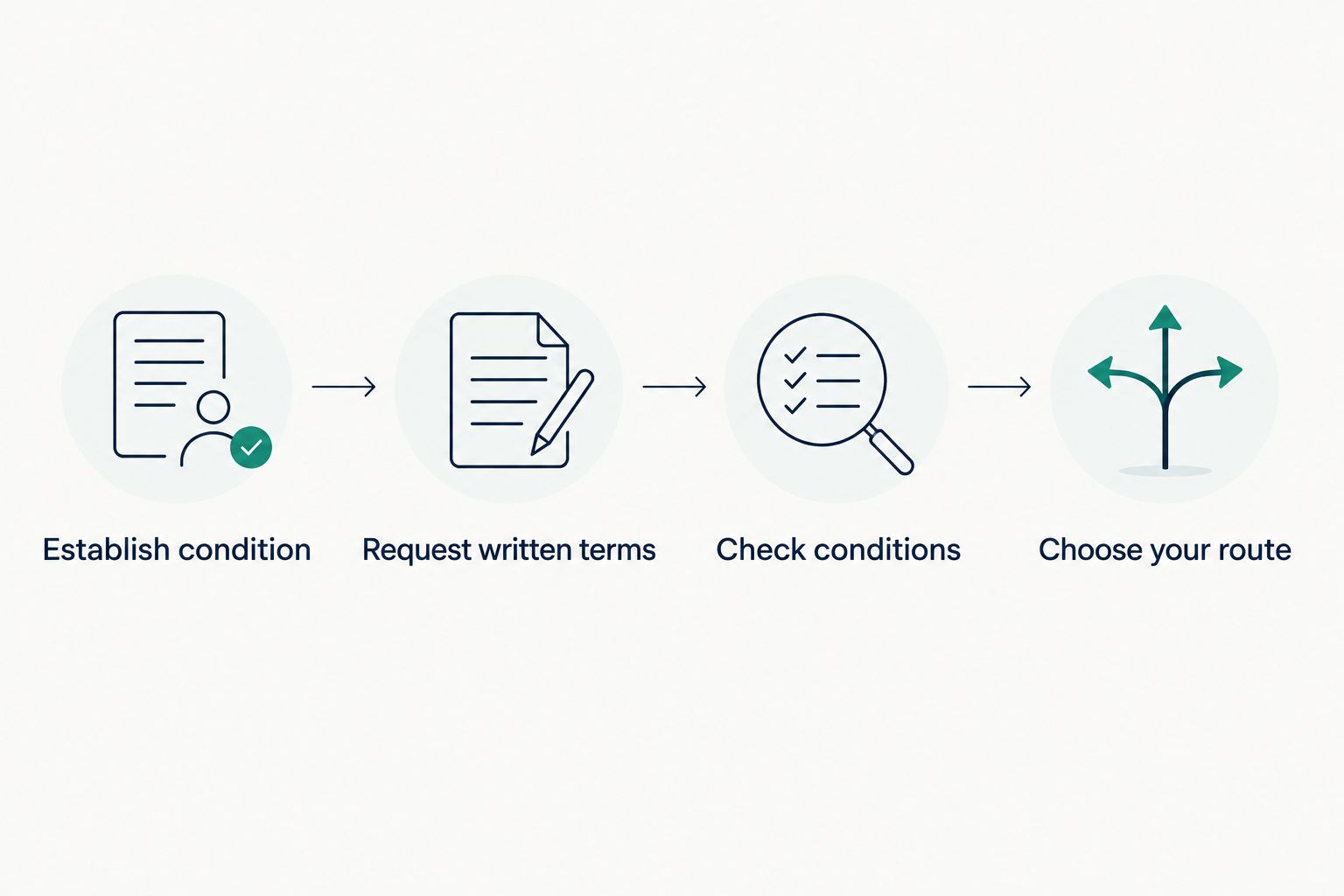
For a 2026 comparison, keep 3 decision points together: expected proceeds, required work, and closing conditions. This prevents a convenient process from being mistaken for the highest-value sale—or a larger offer from being mistaken for a completed transaction.
If a direct review fits your situation, contact us about your home. You can explain its condition and ask questions without committing to sell.
Which way should you choose in 2026?
Start with an as-is offer review if avoiding repair work is your main priority. Compare that written proposal with an agent's as-is selling strategy before spending money on improvements.
Choose the agent-led route when market exposure matters most and you can manage the listing process. Choose targeted repairs when evidence supports a defined scope. Sell yourself only when you are prepared to manage the responsibilities, not merely the advertising.
A looming foreclosure deadline, disputed ownership, probate requirement, or divorce order adds questions that a sale offer alone cannot answer. Speak with a qualified local professional about those requirements; no proposed sale guarantees a particular legal or financial outcome.
FAQ
What’s the best way to sell a house that needs repairs?
An as-is direct offer review fits homeowners prioritizing minimal preparation; an as-is agent listing fits those prioritizing market exposure. Compare written proceeds estimates, contract conditions, and your required work before choosing.
Can I sell my house without fixing anything?
You can pursue an as-is sale without completing repairs first. You still need to follow applicable disclosure requirements, and a buyer can have inspection or financing conditions under the contract.
Will a cash buyer pay as much as an open-market buyer?
An as-is cash offer can be lower than a successful open-market sale. Compare the amount you expect to receive after expenses and obligations, not just the proposed purchase amount.
Does selling as-is mean the buyer cannot request repairs?
Selling as-is does not automatically prevent inspection requests or further negotiations. The written contract determines the parties’ rights, including any right to cancel or request changes.
What costs apply to a direct sale to Polus Acquisitions Group?
The stated terms include no agent commissions or listing fees and coverage of standard closing costs, subject to the written offer. Mortgage payoff, taxes, liens, and other seller obligations are separate; offers remain subject to inspection and transaction requirements.
Should I repair my roof before selling?
Do not authorize roof work solely because you plan to sell. Get a documented assessment and written estimates, then compare an as-is sale with the expected result after repair spending.
Can I sell a home that needs repairs if I still have a mortgage?
An existing mortgage does not automatically prevent a sale, but its payoff and any other liens must be addressed through the transaction. If expected proceeds will not cover the obligations, obtain qualified advice and speak with the lender about the requirements.
One last thing
Do not confuse repairing a home with preparing to make a decision. You can gather repair estimates, compare sale routes, and review an offer without authorizing a renovation.
Before signing, ask for a plain-language explanation of what you would receive, what could change, and what must happen before closing. This article provides general information, not legal, tax, or financial advice.


Leave a Reply