
Best for selling without repairs: a direct as-is offer from Polus Acquisitions Group. Best for market exposure: an as-is agent listing. Best for manageable damage: targeted repairs before listing. This 2026 guide compares those options with full restoration so you can choose without committing to unnecessary work.
- Sell storm damaged house: compare an as-is cash offer with listing and repair options before committing to work.
- Polus Acquisitions Group suits homeowners seeking an as-is sale without cleaning, staging, or arranging repairs.
- An as-is cash offer can be lower than a successful open-market sale; compare your estimated net proceeds.
- Clarify insurance claims, mortgage payoff, damage disclosures, and inspection conditions before signing a sale agreement.
Why this matters
Storm damage creates separate decisions about safety, insurance, repairs, and selling. You do not have to make the same choice for each: protecting a damaged home from further harm does not automatically mean restoring it for a listing.
Choose the sale route around the property's condition and your ability to manage the work—not just the largest offer. For a 2026 sale, compare written terms, remaining obligations, and what must happen before closing. An attractive offer is not the same as money you can count on receiving.
What makes the best way to sell a storm-damaged house?
Use these criteria before choosing a buyer or signing a repair contract:
- Preparation burden: Decide whether you can handle cleanup, contractor access, inspections, and showings.
- Estimated net proceeds: Compare the sale amount after mortgage payoff, applicable costs, and any repairs you fund.
- Closing conditions: Identify inspection rights, financing requirements, title issues, and cancellation provisions.
- Insurance coordination: Understand the status of any claim and what happens to unresolved claim rights or payments.
- Buyer access: Ask whether the property's condition limits financing or safe inspections.
- Your capacity: Include the time and attention the transaction requires, especially if you live elsewhere.
The best option changes when your constraints change. A homeowner who cannot oversee roof repairs has a different decision from someone with completed insurance work and a home ready for showings.
Selling options at a glance
| Option | Best for | Standout feature | Key limitation |
|---|---|---|---|
| Polus Acquisitions Group direct as-is offer | Avoiding sale-preparation work | No repairs, cleaning, or staging required under the stated offer process | Offer can be lower than a successful open-market sale; inspection still applies |
| As-is agent listing | Reaching buyers without restoring the home | Market exposure with the damage disclosed | Showings, buyer conditions, and financing issues remain |
| Targeted repairs before listing | Addressing a defined repair scope | Focuses work on documented problems | Additional damage can expand the project |
| Full restoration before listing | Returning a substantially damaged home to sale-ready condition | Repairs precede marketing | Requires substantial coordination and financial capacity |
1. Polus Acquisitions Group: best for avoiding preparation work
A direct as-is sale lets you consider selling without first preparing the home for a listing. With Polus Acquisitions Group, we offer a free, no-obligation cash-offer review and do not require repairs, cleaning, or staging.
Best for: You want to sell a storm-damaged home without managing a restoration project or preparing for showings.
Our published terms, reviewed November 1, 2026, describe no agent commissions or listing fees and coverage of standard closing costs, subject to the actual written offer. Mortgage balances, taxes, liens, and other seller obligations do not disappear. Offers remain subject to inspection and transaction requirements.
Polus Acquisitions Group pros:
- You can request an offer without committing to sell.
- You do not need to arrange repairs, cleaning, or staging.
- You can discuss a closing date that fits the actual transaction.
Polus Acquisitions Group cons:
- An as-is cash offer can be lower than a successful open-market sale.
- Inspection findings, title issues, and transaction requirements still matter.
- A direct offer does not provide the same market exposure as an advertised listing.
Ask how the damage affected the offer and which conditions permit a change or cancellation. If alternative purchase terms are proposed, understand the actual payment arrangement and risks; a non-cash arrangement is not a cash purchase.
Verdict: Hold off on sale-preparation repairs until you have compared a written as-is offer with your listing options.
2. As-is agent listing: best for reaching the open market
An as-is listing markets the property in its current condition rather than promising repairs before sale. You work with an agent to describe the damage, arrange access, and review offers from interested buyers.
Best for: You can manage marketing and showings but do not want to restore the property before selling.
Ask prospective agents how they would market this specific condition—not simply what they think the house would sell for after repairs. The listing strategy should account for safe access, documentation, and the buyers able to complete the purchase.
As-is listing pros:
- You can expose the property to multiple interested buyers.
- You avoid committing to restoration before testing buyer interest.
- An agent can help organize marketing and compare contract terms.
As-is listing cons:
- Marketing and showings require coordination.
- Buyers can still request inspections, concessions, or cancellation rights.
- Property condition can affect a buyer's financing options.
“As-is” does not mean “no questions asked.” Discuss required disclosures with your agent or qualified local attorney, and make sure the contract states what you are—and are not—agreeing to repair.
Verdict: Skip an as-is listing if managing access and an uncertain marketing period does not fit your situation. Choose it when market exposure is your priority.
3. Targeted repairs: best for a defined, manageable damage scope
Targeted repairs address specific problems before you list rather than turning the sale into a full renovation. Examples include addressing a documented roof leak or repairing a damaged opening after the underlying cause has been assessed.
Best for: You have a clear repair scope, qualified help, and the capacity to manage limited work.
Start with an assessment, not cosmetic improvements. Fresh paint does not resolve an active leak, and visible damage alone does not establish the full scope of a problem.
Targeted repair pros:
- You can focus spending and effort on identified damage.
- Completed work gives you documentation to share with buyers.
- You avoid automatically expanding the project into a whole-home renovation.
Targeted repair cons:
- Opening damaged areas can reveal additional work.
- Contractor scheduling adds another dependency before listing.
- Repair spending does not guarantee an equal increase in sale proceeds.
Get a written scope that distinguishes essential work from optional improvements. Compare the repaired-home sale estimate with an as-is alternative after accounting for the work and the costs of keeping the property during repairs.
Verdict: Hold cosmetic upgrades until the damage scope is clear. Choose targeted repairs only when the work has a defined purpose.
4. Full restoration: best for owners able to manage substantial work
Full restoration means completing the necessary repair project before marketing the home as repaired. Depending on the damage, that can involve contractors, inspections, permits, insurance coordination, and documentation of completed work.
Best for: You want to sell a repaired property and can carry the financial and practical burden of restoration.
This route asks the most of you before a buyer commits. It deserves a written project plan, not an assumption that insurance or the eventual sale will cover everything.
Full restoration pros:
- You address the repair project before negotiating a sale.
- Buyers can evaluate the completed condition rather than an unfinished scope.
- You retain control over the repair decisions before listing.
Full restoration cons:
- You manage the most extensive preparation of these options.
- Uncovered work, changes, or delays can affect your finances.
- A completed project does not guarantee your expected sale result.
For a 2026 restoration plan, confirm contractor requirements and applicable permits with the appropriate local authorities. Keep estimates, contracts, invoices, and inspection records together so you can explain what was repaired.
Verdict: Skip full restoration if you cannot absorb project changes or carry the property through the work. Choose it only with a workable scope and funding plan.
Before you accept an offer
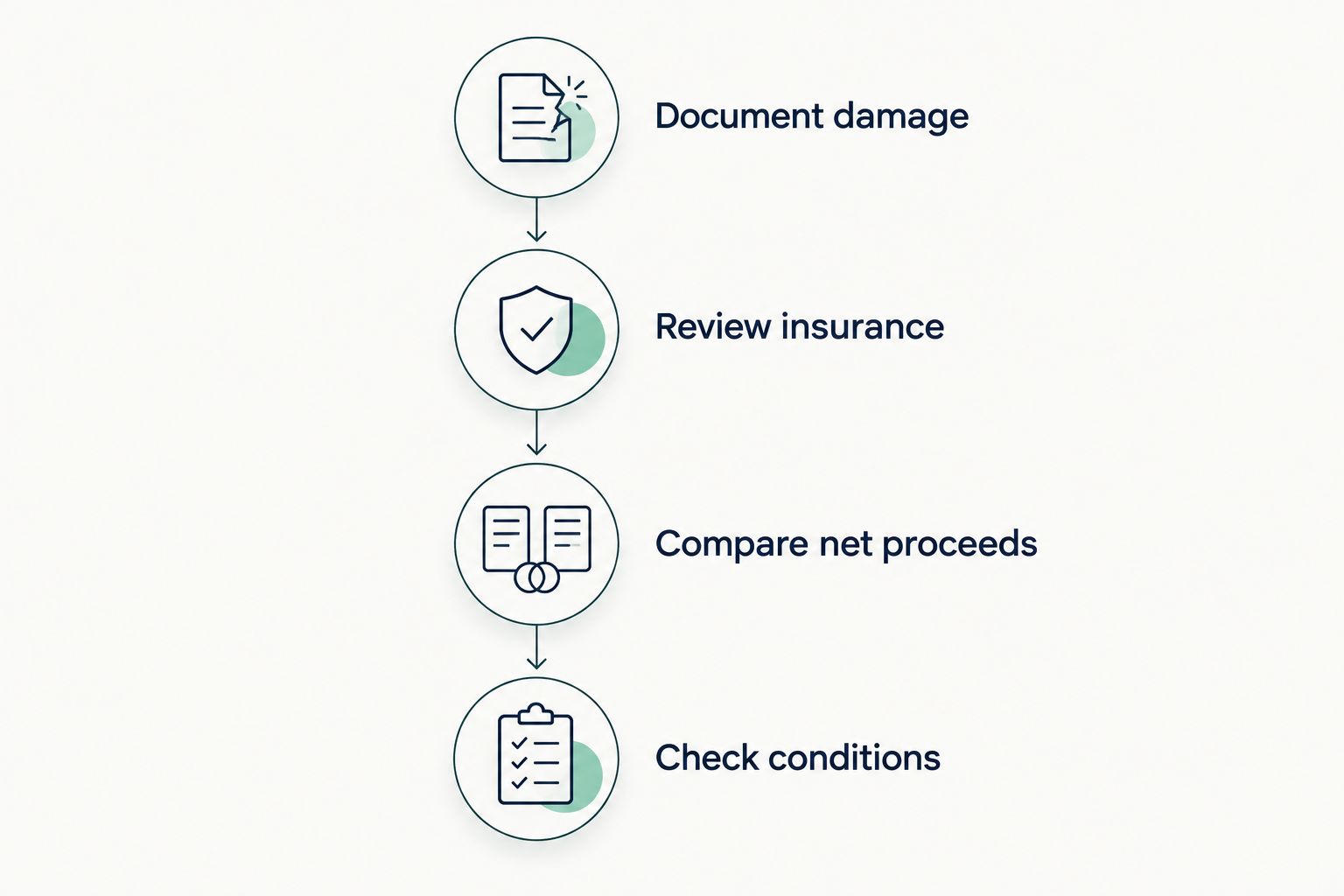
A sale decision becomes clearer when you separate the property's condition from the paperwork needed to transfer it. Follow this sequence before committing to either repairs or a buyer.
Document damage
Photograph the damage from safe locations and collect existing assessments, estimates, and repair records. Do not enter unsafe areas just to prepare for a sale; ask qualified professionals about access and immediate hazards.
Keep a record of protective work already completed. Describe what you know, and distinguish it from what still needs assessment.
Review insurance
Ask your insurer or adjuster how selling affects an open claim, outstanding payments, and any remaining requirements. Do not assume a claim transfers with the property or that a buyer receives its proceeds automatically.
Keep the insurance discussion separate from the purchase offer until the written agreements explain how they interact. For a disputed claim or unclear assignment language, get qualified advice before signing.
Compare net proceeds
Request a written breakdown showing the offer, costs assigned to you, and estimated deductions. Compare the same categories for a listing or repair-first route.
Your mortgage payoff is not necessarily the balance shown on a recent statement. Ask the lender or closing professional for the payoff information required for the transaction.
Check conditions
Read inspection provisions, financing conditions, cancellation rights, and any requirements tied to the insurance claim. Confirm who the buyer is and what must happen before closing.
A proposed date is not a guarantee. Title, ownership authority, lender requirements, and other transaction issues can affect completion.
How the options are ranked
These 2026 recommendations rank sale routes by preparation burden first, then market exposure, repair scope, and transaction conditions. They do not rank buyers by offer size or claim that any route produces the highest proceeds.
The direct as-is route comes first because it addresses the immediate question: can you sell without restoring the home? The remaining options fit homeowners willing to take on progressively more preparation. Compare actual written offers and repair scopes before choosing—not the labels alone.
Which selling option should you choose?
Start with an as-is offer and an informed listing assessment before authorizing sale-preparation work. This gives you alternatives without assuming that repairs are required or financially worthwhile.
If your priority is avoiding preparation, consider a direct purchase. If your priority is market exposure and you can handle access, consider an as-is listing. Choose targeted repairs or restoration only after the scope, funding, and expected benefit are clear.
At Polus Acquisitions Group, we help you review an as-is offer without an obligation to accept. Ask what shaped the offer, what remains subject to inspection, and what you would still owe at closing.
Review your as-is option
Request a free, no-obligation review. Understand the offer and choose whether to proceed.
FAQ
What’s the best way to sell a storm-damaged house?
A direct as-is sale fits homeowners who want to avoid repair preparation, while an as-is listing fits those prioritizing market exposure. Compare written terms, estimated net proceeds, and the work each route requires.
Can I sell a storm-damaged house without fixing it?
Yes, you can seek an as-is buyer rather than repair the home first. You still need to address applicable disclosures, contract requirements, ownership authority, and closing conditions.
Should I finish my insurance claim before selling?
Clarify the claim before agreeing to sale terms, but do not assume every claim must be completed before a sale. Ask your insurer and qualified advisers how the proposed transaction affects payments, claim rights, and outstanding requirements.
Is an as-is cash offer better than listing with an agent?
An as-is cash offer is better suited to avoiding preparation, not automatically to receiving the highest proceeds. A successful open-market sale can produce more, but listing also involves marketing, access, and buyer conditions.
Does selling as-is mean I can avoid disclosing storm damage?
No, an as-is sale does not remove applicable disclosure duties. Ask a qualified local professional which requirements apply and accurately describe known damage and completed repairs.
Can I sell if I still have a mortgage?
An existing mortgage does not automatically prevent a sale. The transaction must address the lender’s payoff and any other liens; seek guidance if the expected proceeds will not cover the required amounts.
Will a cash buyer guarantee my closing date?
A cash offer does not guarantee a closing date. Inspection, title, ownership authority, and other transaction requirements still need to be satisfied.
One last thing
An offer for the house and a payment for storm damage are different transactions. Before accepting either arrangement, ask who retains claim rights, who receives outstanding payments, and whether any repair obligations remain.
For your 2026 sale, keep those answers with the purchase agreement. A clear explanation of what you keep, what you owe, and what must happen next is more useful than a reassuring headline offer.
This article provides general information, not legal, tax, insurance, or financial advice. For foreclosure deadlines, disputed claims, or ownership questions, seek qualified help specific to your property and state.
Related guides


Leave a Reply