
Best for avoiding listing preparation: an as-is cash-offer review from Polus Acquisitions Group. Best for testing open-market demand: an agent listing. To sell house with back taxes owed, compare what you would keep after required payoffs and selling costs—not just the offer amount.
- To sell house with back taxes, compare an as-is cash offer against an agent listing using estimated net proceeds.
- Polus Acquisitions Group suits homeowners seeking an as-is cash-offer review without listing preparation.
- Back taxes do not disappear in a cash sale; confirm the payoff and title requirements.
- An agent listing tests market demand but involves marketing, buyer negotiations, and transaction requirements.
- A tax-sale notice requires prompt local advice; requesting an offer does not stop enforcement.
Why this matters
Back taxes affect what you receive from a sale and what must happen before ownership transfers. Property taxes can create a claim against the home, commonly called a tax lien. A sale requires the closing professional to determine how that claim must be handled.
For a sale in 2026, start with a current tax balance and any enforcement notices. An old bill is not a reliable closing payoff because penalties, interest, or other charges can change the amount due.
The right selling route is the one that fits your condition, deadline, and expected proceeds after obligations—not the one with the biggest headline offer. Neither a cash buyer nor an agent can promise that selling will erase debt or stop a tax sale.
What makes the best way to sell with back taxes
Use these criteria before choosing between a cash offer and a listing:
- Expected net proceeds: Compare the amount remaining after taxes, mortgage payoff, other required payments, and selling costs.
- Property preparation: Decide whether you want to repair, clean, stage, or market the home in its current condition.
- Time available: Separate your preferred moving date from an actual tax-enforcement deadline.
- Buyer conditions: Read inspection rights, financing conditions, cancellation rights, and closing requirements.
- Ownership and title: Confirm who can sign and which claims must be resolved for the transaction.
- Your workload: Consider showings, access, paperwork, belongings, and coordination with other owners.
These criteria apply to both selling routes in 2026. A cash offer removes the need for a buyer mortgage only when the agreement is genuinely a cash purchase; it does not remove title or ownership requirements.
Selling routes at a glance
| Selling route | Best for | Standout feature | Main advantage | Key limitation |
|---|---|---|---|---|
| As-is cash-offer review | Avoiding listing preparation | Direct review of the home and proposed purchase terms | No listing preparation under the stated offer terms | The offer can be lower than a successful open-market sale |
| Agent listing | Testing open-market demand | Public marketing and buyer comparison | Opportunity to compare competing buyers | Marketing does not guarantee an acceptable offer or closing date |
You can request a cash offer and speak with an agent before deciding. Check any agreement before signing so you understand exclusivity, cancellation, and payment obligations.
1. As-is cash offer: best for avoiding listing preparation
An as-is cash sale is a direct purchase without requiring you to prepare the property for a conventional listing. It can fit a home with repair needs, unwanted belongings, or a seller who does not want showings.
Polus Acquisitions Group is best suited to homeowners who want an as-is cash-offer review without preparing a listing. We offer a free, no-obligation review. You retain the choice to accept or decline.
As-is cash-offer advantages
- You can discuss selling without repairs, cleaning, or staging.
- A direct offer gives you specific purchase terms to compare with a listing estimate.
- A genuine cash purchase does not depend on the buyer obtaining a mortgage.
- You can discuss a preferred closing date before accepting an agreement.
As-is cash-offer limitations
- The offer can be lower than the amount achieved through a successful open-market sale.
- Inspection findings and transaction requirements still matter; an offer is not a guaranteed closing.
- Back taxes, mortgages, liens, and ownership problems still require a documented resolution.
Costs and conditions to read
Polus Acquisitions Group describes no agent commissions or listing fees, and coverage of standard closing costs, subject to the actual written offer. Those specific terms do not mean your tax debt, mortgage balance, or every seller expense disappears.
Ask how the home's condition affects the offer. Read who pays each cost and what allows either party to cancel or change terms. If a proposed arrangement is not a cash purchase, ask for a plain-language explanation of how payment works and what risks you retain.
Best for: You want to avoid listing preparation and compare a direct offer against your other choices.
Verdict: Hold off on accepting until you have the written offer and an estimated closing statement.
2. Agent listing: best for testing open-market demand
An agent listing markets the home to potential buyers rather than relying on a single direct offer. You can discuss listing the property as-is; hiring an agent does not automatically mean you must renovate it.
Ask the agent to explain the proposed listing strategy, likely buyer objections, and estimated seller costs. A suggested listing amount is a marketing decision, not a guaranteed sale result.
Agent-listing advantages
- Public marketing lets you test demand beyond a direct buyer.
- You can compare offers with different financing, inspection, and closing terms.
- An agent can coordinate marketing, showings, negotiations, and transaction communication.
- An as-is listing lets you discuss avoiding repairs while still marketing the property.
Agent-listing limitations
- Showings and buyer access create work even when you skip repairs.
- Buyer financing, inspections, and other conditions can affect completion.
- Listing agreements and negotiated selling costs affect your proceeds and flexibility.
What to request from an agent
Ask for a written estimate of proceeds that includes the known tax balance and other payoffs. Have the agent distinguish suggested preparation from work required by a particular buyer or financing arrangement.
If time is limited, ask how the marketing plan accounts for your actual deadline. Do not treat the planned listing date, an accepted offer, and a completed closing as interchangeable events.
Best for: You want to test market demand and can accommodate marketing, buyer access, and negotiations.
Verdict: Hold off on signing until you understand the listing obligations and estimated net proceeds.
How to compare the offers without losing track of the taxes
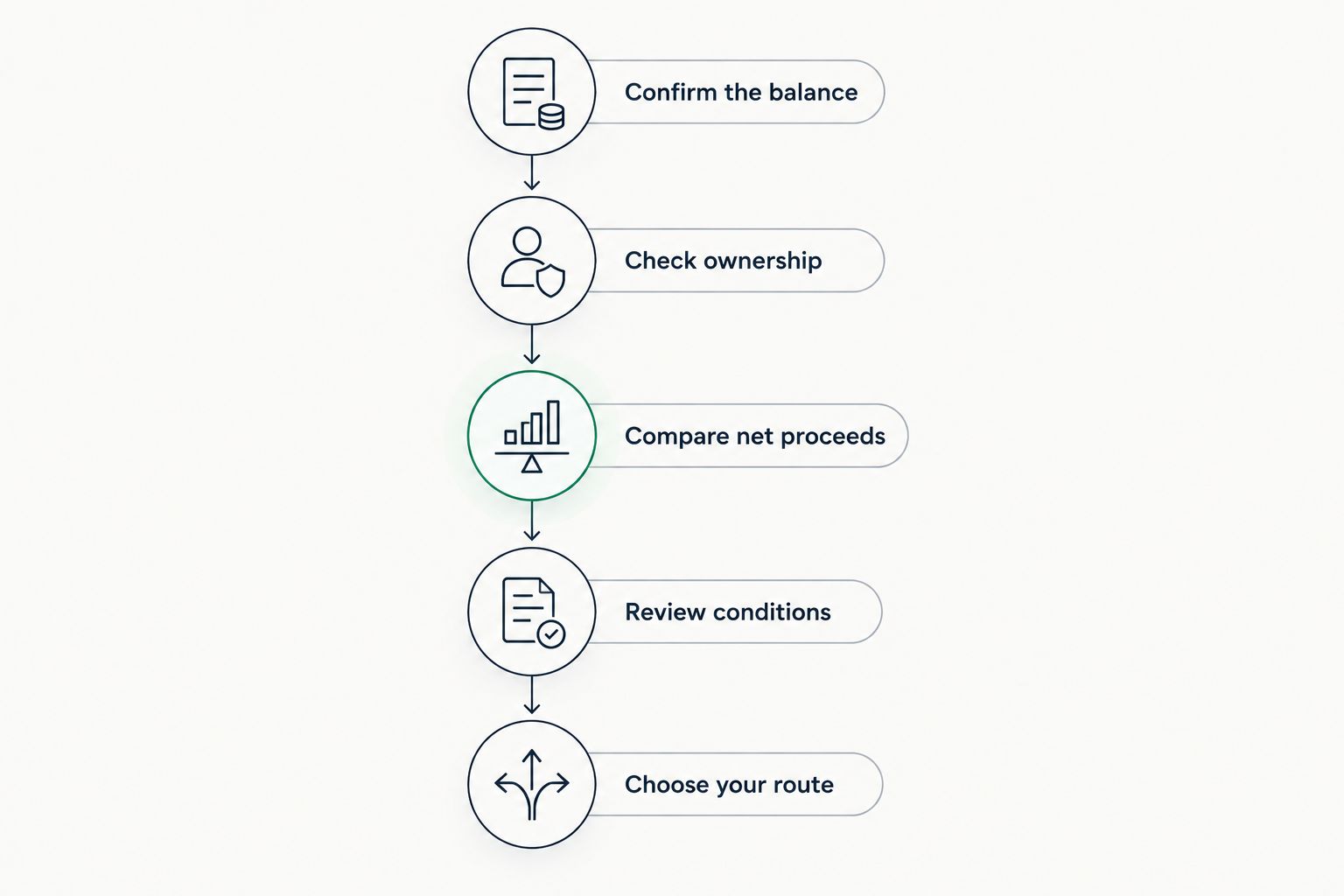
Build your comparison around 3 written documents: the current tax payoff information, the proposed purchase agreement, and an estimated closing statement. Together, they show the obligation, the buyer's terms, and the expected distribution of sale proceeds.
Confirm the balance
Ask the relevant taxing authority or collector for the amount needed to resolve the delinquency and how long that amount remains valid. Ask whether the account has entered an enforcement process and whether another office handles the payoff.
Check ownership
Tell the closing professional about co-owners, an estate, a divorce, or other ownership complications. Probate is the court-supervised process for handling a deceased person's estate; signing authority can depend on that process and local requirements.
Compare net proceeds
Request a line-by-line estimate for each route. In your 2026 comparison, use current payoff figures rather than subtracting an old tax bill from an offer.
Review conditions
Read inspection provisions, financing requirements, cancellation rights, deposits, and the proposed closing date. Ask what remains unresolved before you accept.
Choose your route
Choose the agreement you understand and can meet. If neither route produces workable proceeds or timing, get qualified advice before signing away your remaining flexibility.
A closing statement is an accounting of money entering and leaving the transaction. An estimate helps you compare options, but the final statement must reflect the actual closing figures.
What comes out of the sale proceeds?
The purchase amount and the amount you receive are different figures. Depending on your property and agreement, proceeds must account for delinquent taxes, mortgage payoff, other claims, and seller costs.
Use these 4 payoff questions with the closing professional:
- Which tax accounts and years does the payoff cover?
- Does the figure include applicable penalties, interest, and enforcement charges?
- What other mortgages, liens, or claims must be addressed?
- What changes if closing happens after the payoff's valid-through date?
If you still have a loan, review the separate considerations for selling a house with an existing mortgage. A property-tax payoff and a mortgage payoff are separate obligations.
Do not assume a buyer's agreement to cover standard closing costs includes your tax debt. Ask for the exact treatment in writing. If the sale proceeds will not cover required payments, the transaction needs an approved solution; signing a purchase agreement does not create one.
What if a tax sale or foreclosure deadline is approaching?
A property-tax enforcement process is different from a mortgage foreclosure. The notices, responsible offices, deadlines, and available remedies depend on the location and the obligation involved.
Read every notice and confirm its meaning with the responsible authority. If you have a tax-sale or foreclosure notice in 2026, seek prompt help from a qualified local attorney. Ask the taxing authority what payment or resolution options are actually available for your account.
An offer request, inspection, or signed purchase agreement does not itself stop enforcement. Tell prospective buyers and the closing professional about the notice immediately so they can assess the transaction against the actual deadline.
This is general information, not legal, tax, or financial advice. Use qualified local help for questions about enforcement, estate authority, ownership disputes, or a potential shortfall.
How these selling routes are ranked
The cash-offer route comes first for avoiding listing preparation, not because it guarantees more money. The agent-listing route leads on testing open-market demand, not because marketing guarantees a higher completed sale.
Compare both against the same tax payoff, property condition, and deadline. Polus Acquisitions Group's as-is cash-offer review is one option—not a substitute for checking your obligations or considering a listing.
Which selling route should you choose?
Start with a written cash offer and a written agent estimate, then compare expected net proceeds and conditions. You do not need to commit to a sale just to understand the alternatives.
Choose a cash-offer review when avoiding preparation is your priority. Consider an agent listing when testing buyer demand matters more and the marketing process fits your circumstances.
Understand your as-is selling option
Request a free cash-offer review. You can accept or decline; offers remain subject to inspection and requirements.
FAQ
Can I sell my house if I owe back property taxes?
Yes, a sale can proceed when the transaction meets the requirements for addressing the back taxes and other title obligations. Have the closing professional confirm the payoff, required documents, and how the taxes will be handled.
Is a cash offer better than listing a house with back taxes?
A cash offer is better suited to avoiding listing preparation; an agent listing is better suited to testing open-market demand. Compare estimated net proceeds, contract conditions, and the time available before deciding.
Does selling as-is mean the buyer pays my back taxes?
No, selling as-is does not automatically make the buyer responsible for your back taxes. The written agreement and closing arrangements must explain how the taxes are paid and how that affects your proceeds.
Can I sell if the taxes and mortgage exceed the sale proceeds?
A sale requires a workable, approved resolution for obligations that must be addressed at closing. Ask the closing professional and relevant creditors what is required, and obtain qualified advice before agreeing to terms.
Will accepting a cash offer stop a tax sale?
Accepting a cash offer does not itself stop a tax sale. Confirm deadlines with the responsible authority and seek prompt local legal advice about your situation.
Do I have to repair the house before requesting an offer?
You do not have to repair, clean, or stage the home to request our as-is cash-offer review. Offers remain subject to inspection and transaction requirements, and requesting a review does not obligate you to sell.
What paperwork should I gather before selling in 2026?
Gather current tax statements, enforcement notices, mortgage information, and documents showing ownership or signing authority. Ask the closing professional which additional records your property and transaction require.
One last thing
Ask when the tax payoff expires. A transaction that moves past that date needs an updated figure, even if the buyer's offer has not changed. That small document check makes your comparison more useful than focusing on the offer alone.
Related guides
- Options for selling a house before foreclosure
- Ways to sell a house that needs repairs
- Options for selling a probate house


Leave a Reply