
Best for avoiding repair work: an as-is cash sale. Best for testing the open market: an as-is listing. Best for correcting manageable violations: repair, then list. Best for a property needing a specialist buyer: an auction. To sell a house with code violations in 2026, compare these routes against the actual notice—not just the condition you can see. Polus Acquisitions Group is an option for homeowners seeking an as-is cash offer without preparing the home for a listing.
- To sell house with code violations, compare an as-is cash sale, an as-is listing, repairs, and auction terms.
- Polus Acquisitions Group suits homeowners seeking an as-is cash offer without repairs, cleaning, or staging.
- Selling as-is does not erase disclosure duties, municipal requirements, liens, or mortgage payoff obligations.
- Choose your route after checking the violation notice, repair scope, ownership records, and written sale terms.
Why this matters
A code violation is a local government's finding that a property does not meet an applicable rule. It might involve an unpermitted alteration, unsafe electrical work, property maintenance, or another condition identified in the notice. Those situations require different responses.
For a 2026 sale, separate the physical problem from the enforcement problem. Repairing a condition does not necessarily close the municipal file, and accepting an offer does not necessarily release a recorded lien. Your first decision is not which buyer sounds fastest. It is what the property requires before ownership can transfer under the proposed terms.
What makes the best way to sell with code violations?
Use these five criteria before choosing a route:
- Repair responsibility: Identify who handles permits, contractors, inspections, and unresolved work.
- Buyer fit: Find out whether the buyer accepts the disclosed condition and how the purchase is funded.
- Expected proceeds: Compare the amount left after documented transaction costs, payoffs, and agreed obligations—not the offer alone.
- Closing conditions: Look for inspection rights, financing conditions, title requirements, and cancellation terms.
- Seller control: Keep your choice to decline an offer, obtain independent advice, and negotiate a workable possession date.
A route that avoids construction is not automatically the route with the highest proceeds. A higher offer with unresolved financing or title questions is not automatically the stronger offer either.
Selling routes at a glance for 2026
| Route | Best for | Standout feature | Key limitation |
|---|---|---|---|
| As-is cash sale | Avoiding repair management | Buyer evaluates the property in its current condition | Offer can be lower than a successful open-market sale |
| As-is listing | Seeking market exposure without upfront repairs | Multiple buyers can evaluate the disclosed condition | Financing and inspection issues can restrict the buyer pool |
| Repair, then list | Correcting a defined, manageable violation | Addresses the condition before marketing | Requires money, coordination, and municipal follow-through |
| Specialist property auction | Seeking competitive bids from renovation buyers | Published bidding and sale procedures | Fees, reserve rules, and binding terms need close review |
These are selling methods, not promises of a particular outcome. Local requirements and the signed agreement determine what each route actually involves.
1. As-is cash sale: best for avoiding repair management
An as-is cash buyer evaluates your home without requiring you to prepare it for a conventional listing. That suits a homeowner who does not want to coordinate cleanup, construction, or staging before seeking an offer.
With Polus Acquisitions Group, you can request a free, no-obligation cash-offer review. We explain the offer and discuss the transaction; you choose whether to accept or decline. Offers remain subject to inspection and transaction requirements.
As-is cash sale pros:
- You can seek an offer without first completing repairs.
- A cash purchase does not depend on the buyer obtaining a mortgage.
- You can discuss the property's condition before committing to a contract.
As-is cash sale cons:
- An offer can be lower than a successful open-market sale.
- Inspection and title issues still matter.
- A sale does not automatically eliminate fines or recorded claims.
Best for: Homeowners prioritizing an as-is process over managing repairs and listing preparation.
Verdict: Choose this route when avoiding repair work matters more than testing the full open market.
2. As-is listing: best for testing market demand
An as-is listing exposes the home to buyers while making clear that you are not agreeing to complete every requested repair. Your agent should describe the known condition accurately and help identify buyers prepared for it.
The listing label does not override disclosure law or a lender's property requirements. Ask how offers will address the specific violation, rather than assuming every interested buyer can complete the purchase.
As-is listing pros:
- You can seek competing offers.
- You retain the option to decline unacceptable terms.
- You can market the property without committing to a renovation first.
As-is listing cons:
- Some buyers cannot finance the property in its present condition.
- Showings, inspections, and negotiations still require coordination.
- Agent compensation and other agreed selling expenses affect proceeds.
Best for: Owners who can accommodate marketing and negotiations without needing to repair first.
Verdict: Choose an as-is listing when market exposure matters and you can handle an uncertain sale process.
3. Repair, then list: best for a defined compliance problem
Repairing before listing makes sense when you can establish what the municipality requires and obtain a practical scope of work. Start with the notice and permit requirements, not cosmetic improvements.
A contractor's finished work and a closed enforcement case are different milestones. Confirm whether an inspection, permit sign-off, or other written confirmation is needed after construction.
Repair-first sale pros:
- You address the identified condition before buyer inspections.
- Documented work gives buyers clearer information.
- Resolving property-condition issues can remove a financing obstacle.
Repair-first sale cons:
- You fund and manage work before the sale.
- Opening walls or reviewing permits can reveal additional work.
- Spending on repairs does not guarantee an equal increase in proceeds.
Best for: Owners with a clearly defined violation, reliable repair information, and the ability to manage the work.
Verdict: Choose repairs first only after the scope, approval process, and financial trade-off are clear.
4. Specialist property auction: best for renovation buyers
An auction markets the property through a defined bidding process rather than ordinary offer negotiations. An auction firm experienced with homes needing repairs can explain how it presents violation records and qualifies bidders.
Read the seller agreement before authorizing marketing. A reserve is a minimum acceptable bid under the auction's terms; it does not mean every auction uses one or guarantees a sale.
Property auction pros:
- The bidding process has stated procedures.
- You can disclose condition documents before bidding.
- A specialist audience can include buyers prepared for substantial work.
Property auction cons:
- Fees and buyer charges affect the transaction economics.
- Reserve and cancellation provisions can restrict your choices.
- Bidding does not guarantee acceptable proceeds or a completed closing.
Best for: Owners considering a specialist marketing process for a property requiring substantial work.
Verdict: Consider an auction only after understanding the reserve, fees, bidder requirements, and binding terms.
How these routes are ranked
This 2026 ranking starts with avoiding repair management, then separates market exposure, correction before sale, and specialist bidding. It does not rank buyers by unsupported speed or purchase-price claims.
The default is an as-is cash review when your main goal is avoiding preparation. The default changes to an as-is listing when you want broader exposure and can accommodate negotiations. Your priorities determine the route; the violation records determine its feasibility.
Check the notice before choosing a buyer
Gather 3 records: the violation notice, available permit or inspection records, and any recorded lien information. Keep the complete notice, including attachments and stated deadlines. A buyer needs the actual requirements, not a summary such as the house needs work.
Ask the issuing department what remains open, what action is required, and whether a proposed ownership transfer triggers additional requirements. Request written clarification where available. If enforcement is active, do not assume a pending sale pauses it.
Next, ask the title or closing professional to identify recorded claims and explain how the proposed transaction handles them. A mortgage payoff, municipal lien, unpaid tax, and repair estimate are separate items. Do not combine them into one unexplained deduction.
Finally, establish who has authority to sign. Inherited ownership, divorce orders, trusts, and shared ownership can affect that answer. A qualified local attorney can address legal questions without relying on a buyer's interpretation.
Compare repairs with selling as-is
Before committing to construction, request 2 written estimates based on the same required scope. This is a comparison method, not a claim that two estimates settle every uncertainty. Ask each contractor to separate required compliance work from optional improvements.
Separate correcting the cited condition from improving the home for resale. Include permits, inspections, and related work in the written scope; keep optional upgrades in a separate column.
A repair-versus-as-is worksheet
| Decision line | Repair, then list | Sell as-is |
|---|---|---|
| Work before sale | Required scope, permits, inspections | Work expressly required by the offer, if any |
| Money before closing | Contractor payments and ownership costs | Agreed pre-closing expenses |
| Compliance responsibility | Identify who obtains final sign-off | Identify what the municipality and contract require |
| Expected proceeds | Supported sale estimate less all applicable costs | Written offer less applicable deductions |
| Unresolved questions | Hidden work, reinspection, buyer financing | Buyer access, inspection rights, title conditions |
Illustrative decision, not a Polus transaction: A notice concerns an unpermitted room addition. A cosmetic cleanup does not answer whether the addition needs permits or corrective work. First obtain the issuing department's requirements; then compare a contractor's written scope with a buyer's written as-is terms. Do not assume the buyer can take over every legal obligation.
Questions for the issuing department
- Which notice items remain open, and what are the stated deadlines?
- What permits, inspections, or documents are needed to close the file?
- Does a change of ownership require approval or additional action?
- Are charges or recorded liens separate from the physical repairs?
- Who can provide written confirmation of the current requirements?
Compare the repair-first route with actual as-is offers. Use a conservative resale estimate supported by local market evidence, then subtract documented selling expenses, repair costs, and ownership costs during the work. Keep uncertain items visible rather than treating them as zero.
Do not fund a renovation solely because the expected sale price looks higher. The relevant comparison is what you expect to retain, what you must spend first, and which risks you are willing to carry.
Review an offer in three stages
Use 3 review stages for a 2026 offer: condition, obligations, and closing. Keep those topics separate so a simple headline offer does not hide a complicated agreement.
Condition
Confirm that the buyer received the violation notice and understands the known condition. Read inspection rights and any provisions allowing renegotiation or cancellation. Ask what information remains outstanding before the buyer can proceed.
Obligations
Identify who is responsible for repairs, permits, municipal requirements, and agreed transaction expenses. Check whether the contract requires anything from you before closing. An as-is description should not substitute for clear written responsibilities.
Closing
Ask how title issues, existing loans, required approvals, and possession will be handled. Separate a proposed closing date from a guaranteed closing. The transaction still depends on the requirements that apply to the property and its owners.
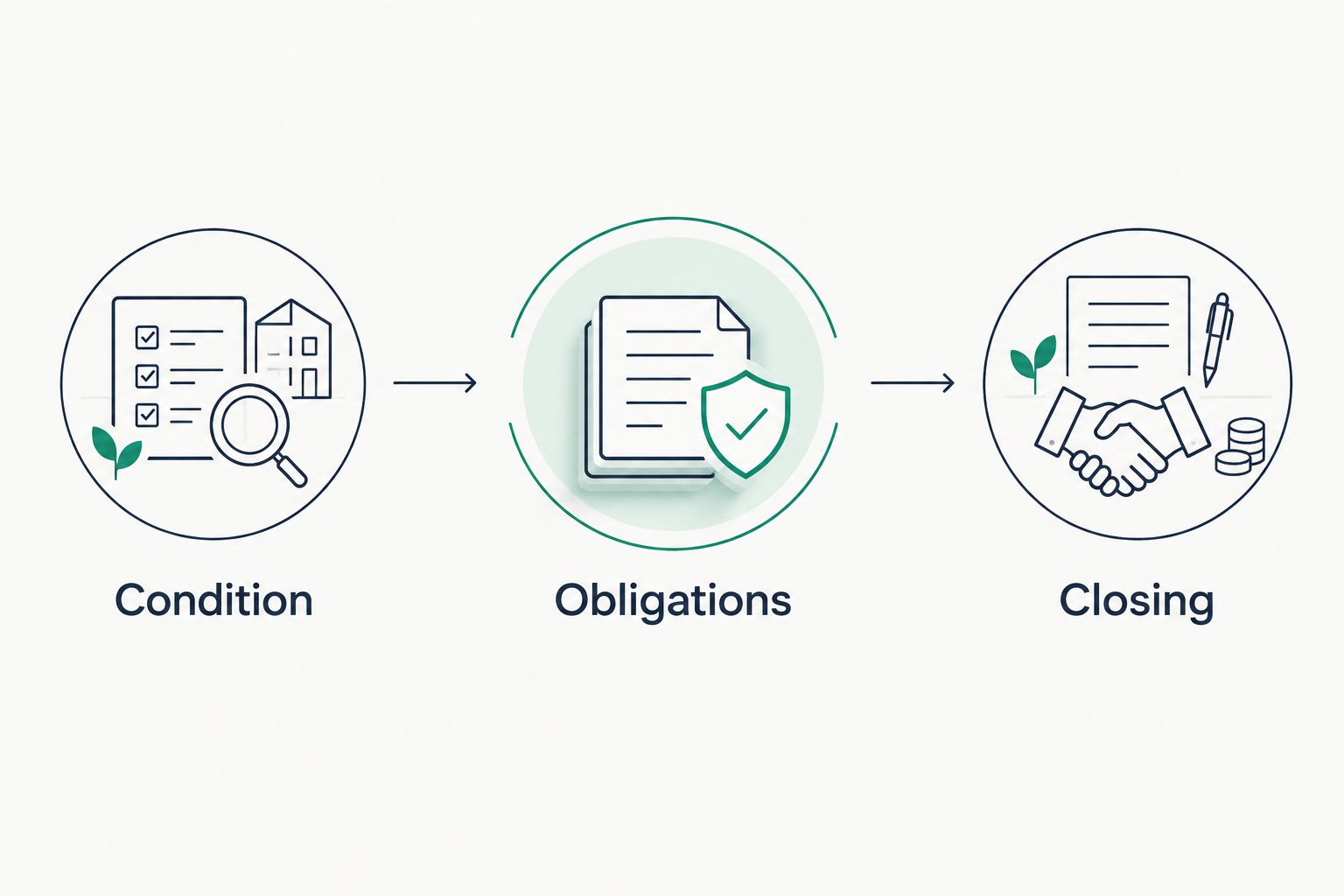
A written summary helps you compare offers, but the signed contract controls the agreement. Ask for an explanation of any provision you do not understand before signing, and obtain independent legal advice when needed.
Understand the costs in a direct offer
For a Polus Acquisitions Group cash sale, our stated terms include no agent commissions or listing fees, no required repairs, cleaning, or staging, and coverage of standard closing costs, subject to the actual written offer. Those terms do not mean mortgage balances, taxes, liens, or every seller obligation disappear.
Ask for a written explanation of the offer and estimated proceeds. If alternative purchase terms are proposed, require a plain explanation of the arrangement and its risks. A non-cash arrangement is not a cash purchase, and you should not compare the two as though payment and obligations were identical.
Requesting an offer does not obligate you to sell. You can compare it with listing or repairing before deciding.
Understand your as-is offer
Request a free, no-obligation cash-offer review. Offers remain subject to inspection and transaction requirements.
Which selling route should you choose?
Start with an as-is cash review if you want to avoid repair management. Compare that offer with an as-is listing if you also want to test market demand. Neither step requires you to assume that repairs are the answer.
Choose repair-first selling when the required work is defined and the financial comparison supports it. Consider an auction when you understand its specialist process and contractual limits. For any route, unresolved ownership, enforcement, or title questions need attention before you rely on a closing date.
FAQ
Can I sell a house with code violations in 2026?
A house with code violations can be sold, but local requirements, title issues, and the transaction terms determine what must happen before closing. Disclose known violations as required and confirm how outstanding obligations will be handled.
What’s the best way to sell a house with code violations without making repairs?
An as-is cash sale is the most direct route to consider when your priority is avoiding repair work. An as-is listing is another option if you want market exposure and can accommodate showings and negotiations.
Does selling as-is mean I don’t have to disclose violations?
No. Selling as-is does not eliminate applicable disclosure duties. Provide accurate information and ask a qualified local professional which disclosures your transaction requires.
Will a cash buyer pay my code violation fines?
Only the written agreement establishes how fines or related claims will be handled. Do not assume that a cash offer includes payment of every municipal charge or that a change of ownership erases it.
Can a buyer get a mortgage on a house with code violations?
Mortgage eligibility depends on the property condition, loan program, and lender requirements. Some conditions require correction before funding, so confirm the buyer’s financing path rather than relying on the listing’s as-is label.
Does Polus Acquisitions Group require me to repair the house?
Polus Acquisitions Group offers an as-is process without required repairs, cleaning, or staging. Offers remain subject to inspection and transaction requirements, and the written offer governs the specific terms.
Will selling my house stop foreclosure or resolve probate?
A sale does not guarantee foreclosure prevention or a probate outcome. For time-sensitive foreclosure or estate questions, obtain qualified local legal help and confirm the requirements before relying on a proposed sale.
One last thing
A repaired house and a closed violation file are not the same thing. Before spending money, ask what documentation the municipality requires to recognize compliance. Before selling, ask how unresolved requirements will be handled in the transaction.
That distinction protects your decision from an expensive misunderstanding: completing visible repairs while leaving the administrative issue unresolved. This article provides general information, not legal, tax, or financial advice.
Related guides
- Best ways to sell a house that needs repairs
- Best options for selling a house before foreclosure
- Best options for selling a probate house


Leave a Reply