
Best overall for avoiding listing preparation: a direct as-is sale. Best for controlling your marketing and negotiations: a DIY sale. Best for a scheduled bidding process: an auction. To sell house without a realtor in 2026, choose among these 3 sale routes based on the work you can handle, your property’s condition, and the terms you need—not commission savings alone.
- To sell house without a realtor, compare direct sales, DIY listings, and auctions by responsibilities and net proceeds.
- Polus Acquisitions Group offers an as-is direct-sale route without preparing your home for a listing.
- DIY selling gives you control but leaves marketing, buyer screening, and negotiations with you.
- Auctions create a bidding process; reserve terms, fees, and closing requirements still matter.
Why this matters
Selling without a listing agent changes who handles the work. It does not remove disclosure duties, title problems, mortgage payoff requirements, or the need for a valid contract.
Polus Acquisitions Group buys homes as-is, with offers subject to inspection and transaction requirements. A direct sale trades open-market exposure for a simpler selling process; a successful open-market sale can produce a higher offer. Decide whether that trade fits your situation before signing anything.
What makes the best way to sell without an agent?
Use these criteria to compare your choices in 2026:
- Preparation burden: Does the route require cleaning, repairs, photographs, showings, or repeated property access?
- Buyer exposure: Are you negotiating with one buyer or inviting competing buyers?
- Seller workload: Who handles inquiries, disclosures, scheduling, contracts, and follow-up?
- Net proceeds: What remains after agreed expenses, mortgage payoff, taxes, and other obligations?
- Closing conditions: What inspection, financing, title, or court requirements must be satisfied?
- Control: Can you decline the offer, change your plan, or reject bids under the agreement?
Your best route is the one whose responsibilities you understand and can carry out. An attractive offer is not enough if its conditions leave you unable to complete the sale.
Selling without an agent: routes at a glance
| Route | Best for | Standout feature | Key limitation |
|---|---|---|---|
| Direct as-is sale | Avoiding listing preparation | You negotiate directly with a buyer about the property in its current condition | Less exposure to competing buyers; the offer can be below an open-market result |
| DIY sale, or FSBO | Keeping control of marketing and negotiations | You manage the listing, inquiries, showings, and buyer discussions | You carry the sales workload without a listing agent |
| Real estate auction | Using a scheduled bidding process | Buyers bid under published auction terms | Fees, reserve rules, and bidder participation affect the outcome |
FSBO means for sale by owner. It describes selling without a listing agent, not selling without professional help of any kind.
1. Direct as-is sale: best for avoiding listing preparation
A direct sale means you negotiate with a buyer rather than hiring an agent to market the property. An as-is agreement addresses the home in its current condition, but the written contract still controls inspection rights and other conditions.
Polus Acquisitions Group is a direct-sale option for homeowners who want to sell as-is without preparing a listing. We offer a free, no-obligation cash-offer review, and requesting an offer does not commit you to selling.
Direct as-is sale pros
- You can discuss the home without repairing, cleaning, or staging it for our offer process.
- You avoid managing a public listing and its showing schedule.
- You can ask the buyer to explain the offer and proposed closing terms directly.
- You retain the choice to accept or decline before entering a binding agreement.
Direct as-is sale cons
- An as-is cash offer can be lower than a successful open-market sale.
- Negotiating with one buyer does not provide the same exposure as broad marketing.
- Inspection, ownership, and title requirements still affect whether the transaction closes.
Our stated terms include no agent commissions or listing fees, with standard closing costs covered, subject to the actual written offer. Mortgage balances, taxes, liens, and other seller obligations do not disappear.
Ask what information supports the offer, what inspection remains, and what circumstances allow either party to terminate. A cash purchase should also be distinguished from any alternative arrangement involving payments over time or an existing loan.
Best for: You want to avoid preparing and marketing the home yourself, and you accept the trade-off in buyer exposure.
Verdict: Choose a direct sale when as-is convenience matters more than testing the open market.
2. DIY sale: best for controlling marketing and negotiations
In a DIY sale, you take responsibility for attracting and evaluating buyers. You arrange photographs, write the property description, respond to inquiries, schedule access, and negotiate the contract.
Selling yourself does not mean handling legal questions alone. You can seek an attorney’s advice and use a title or closing provider while remaining responsible for the sale’s marketing and negotiations.
DIY sale pros
- You control the property description, showing arrangements, and negotiating approach.
- You can seek competing offers instead of negotiating only with a direct buyer.
- You choose which professional services to hire separately.
- You communicate directly with prospective buyers about their proposals.
DIY sale cons
- Buyer inquiries, showing requests, and follow-up become your responsibility.
- Incorrect disclosures or poorly understood contract terms create risk.
- Avoiding a listing agent does not eliminate every transaction expense or possible brokerage payment.
In 2026, compare any marketing or listing service by its written scope. Paying for exposure does not necessarily include buyer screening, negotiation, disclosure assistance, or contract management.
Before accepting an offer, review the buyer’s financing, contingencies, deposit provisions, and proposed deadlines. Proof of funds supports a cash claim; a lender letter is not the same as completed loan approval.
For an occupied home, establish lawful access arrangements before advertising showings. Do not assume that listing the property ends a lease or lets you require immediate vacancy.
Best for: You have time to manage buyers, can arrange property access, and want to control how the home reaches the market.
Verdict: Choose DIY selling when you are prepared to do the sales work—not merely avoid a listing commission.
3. Real estate auction: best for a scheduled bidding process
A real estate auction invites buyers to bid under defined terms. The auction agreement determines how bidding works, whether a minimum acceptable bid applies, and what happens after bidding ends.
A reserve is a minimum amount or acceptance condition established under the auction terms. An absolute auction generally sells without a reserve; understand that distinction before authorizing one.
Real estate auction pros
- The auction sets a defined bidding event or bidding period.
- Published terms give bidders a common process to follow.
- Competing bidders can participate in the same sale process.
Real estate auction cons
- Bidding does not guarantee an acceptable result or a completed closing.
- Auction fees and other charges depend on the agreement.
- An unsuitable reserve or restrictive bidder requirements can affect participation.
Ask the auction provider who pays each fee, whether the seller can reject a result, and whether bidders must provide deposits or proof of funds. Also ask who handles property access, disclosures, contract preparation, and a winning bidder’s failure to close.
Best for: You want a structured bidding event and understand the reserve, withdrawal, and closing rules.
Verdict: Choose an auction only after reviewing both the auction agreement and the buyer’s sale contract.
Compare what you keep, not just what you avoid
For a useful 2026 comparison, request 2 net sheets: one for a direct-sale offer and one for your planned DIY or auction route. A net sheet estimates what remains after the transaction’s deductions; it is not a guaranteed payout.
Use consistent assumptions. Include the mortgage payoff, applicable taxes, title-related charges, agreed concessions, and any route-specific expenses. Separate confirmed figures from estimates so an optimistic assumption does not look like money you will receive.
Also identify what happens before closing. Continuing ownership can involve insurance, utilities, maintenance, and loan payments. Do not assign those expenses an invented timeline; use your actual obligations and a realistic transaction schedule.
The better offer is not automatically the larger headline amount. Compare its conditions, expected deductions, and the work required to reach closing.
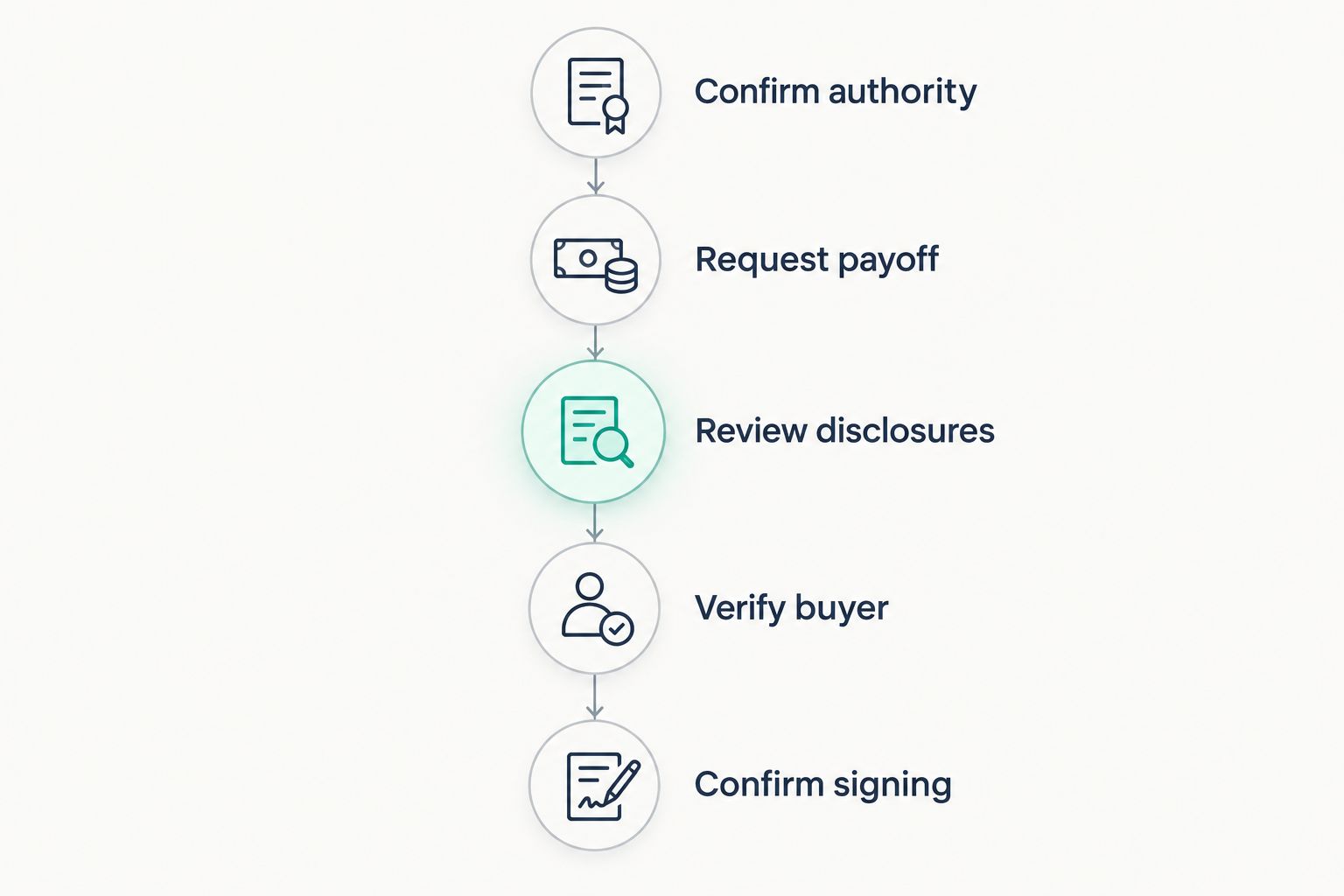
Complete these 5 checks before signing
A buyer’s willingness to proceed does not establish that the property is ready to transfer. Complete these checks before treating a proposed closing date as settled.
Confirm authority
Identify everyone whose approval or signature is required. For an inherited home, probate—the legal process for handling a deceased person’s estate—can determine who has authority to sell. A divorce order or shared ownership can also affect who must participate.
Request payoff
Ask the loan servicer for the payoff information needed for closing. The balance on a statement is not necessarily the amount required to satisfy the loan on the closing date. Have the closing provider identify other recorded claims that need attention.
Review disclosures
Selling as-is does not automatically remove disclosure obligations. Ask a qualified local professional which disclosures apply and describe known conditions accurately. Do not treat a buyer’s inspection as a substitute for required disclosures.
Verify buyer
Understand who is signing the contract and how the purchase will be funded. Ask whether the named buyer expects to complete the purchase or transfer contractual rights to someone else. Review any assignment provision before agreeing.
Confirm signing
Confirm how each owner will sign and which documents the closing provider requires. Rules for remote deed notarization in Nevada concern how a signature is notarized, not whether the seller has authority to transfer the property or whether the receiving parties accept the execution method.
Ask your closing provider to approve the signing arrangement in advance. Remote signing does not replace title review, required approvals, or other closing conditions.
How these selling routes are ranked
This 2026 ranking prioritizes preparation burden first, then seller workload, buyer exposure, net proceeds, and closing conditions. It ranks sale methods by their fit for different homeowner needs—not by promised proceeds or unverified speed claims.
Direct selling comes first for avoiding listing preparation. DIY selling is the better fit for controlling marketing, while an auction suits sellers who specifically want a bidding process. None removes the need to understand the contract.
Which selling route should you choose?
Start with a direct as-is offer if preparing the home is the obstacle. Then compare that written offer with the responsibilities and likely deductions of selling it yourself. You can decline an offer that does not fit.
Choose DIY selling if you want wider buyer exposure and can handle the work. Choose an auction if its bidding rules serve your goals and you understand the consequences of the reserve and fee terms.
Polus Acquisitions Group gives you an opportunity to discuss an as-is sale without committing to accept an offer. All offers remain subject to inspection and transaction requirements; the closing date must fit the actual transaction.
Discuss your as-is sale
Request a free, no-obligation cash-offer review. You choose whether to proceed.
FAQ
What’s the best way to sell house without a realtor?
A direct as-is sale fits sellers who want to avoid listing preparation; DIY selling fits those who want to manage marketing and negotiations. An auction fits sellers who specifically want a structured bidding process. Compare written terms and net proceeds before choosing.
Can I sell my house as-is without making repairs?
Yes, you can seek a buyer willing to purchase the home in its current condition. As-is terms do not automatically remove disclosure duties or the buyer’s contractual inspection rights.
Does selling without an agent mean I pay no selling costs?
No. You can still have mortgage payoff obligations, taxes, title-related charges, and other agreed expenses. Review a written settlement estimate rather than assuming every deduction disappears.
Is a cash offer better than selling the house myself?
A cash offer is better suited to avoiding listing work, while selling yourself gives you control over marketing and buyer discussions. A successful open-market sale can produce a higher offer, so compare the trade-offs rather than treating either route as universally better.
Do I need a lawyer to sell without a realtor?
Attorney requirements depend on the state and transaction. Ask a qualified local real estate attorney or closing provider what applies, especially when ownership, probate, divorce, or contract terms are disputed.
Can I sell a house without an agent if I still have a mortgage?
Yes, but the existing loan must be addressed as part of the transaction. Ask for a payoff statement and have the closing provider explain how the loan and any other claims will be handled.
Can selling my house stop foreclosure?
A proposed sale does not guarantee that foreclosure stops. Contact your loan servicer and qualified local legal help promptly to understand deadlines and available options; do not rely on an unsigned offer or proposed closing date.
One last thing
Without a listing agent does not mean without representation or advice. You can retain control of the sale while asking an attorney to explain the contract and a closing provider to explain the deductions.
Before signing in 2026, ask each provider exactly whom they represent. Handling paperwork does not automatically mean someone is protecting your negotiating interests. This article is general information, not legal, tax, or financial advice.
Related guides
- Selling a house that needs repairs
- Options for selling a probate house
- Selling a house with tenants
- Selling a house with an existing mortgage


Leave a Reply