
For a 2026 sale, disclose known open code violations, the underlying property problems, and any notices, orders, or enforcement action as required by your state and local rules. Share the records you have, and identify what remains unresolved rather than describing the property as cleared. Selling as-is does not automatically remove disclosure duties or cancel fines, liens, repair orders, or restrictions on transferring the property.
- To disclose open code violations when selling house, provide known notices, underlying defects, and unresolved enforcement details.
- An as-is sale addresses repair responsibility; it does not automatically eliminate disclosure obligations.
- Confirm transfer restrictions, recorded liens, and outstanding orders before agreeing to closing terms.
- Polus Acquisitions Group offers an as-is option; inspection and transaction requirements still apply.
What must I disclose when selling a house with open code violations?
Your disclosure should accurately describe what you know about the violation and the property's condition. The required form, timing, exemptions, and level of detail depend on the property's location and the transaction.
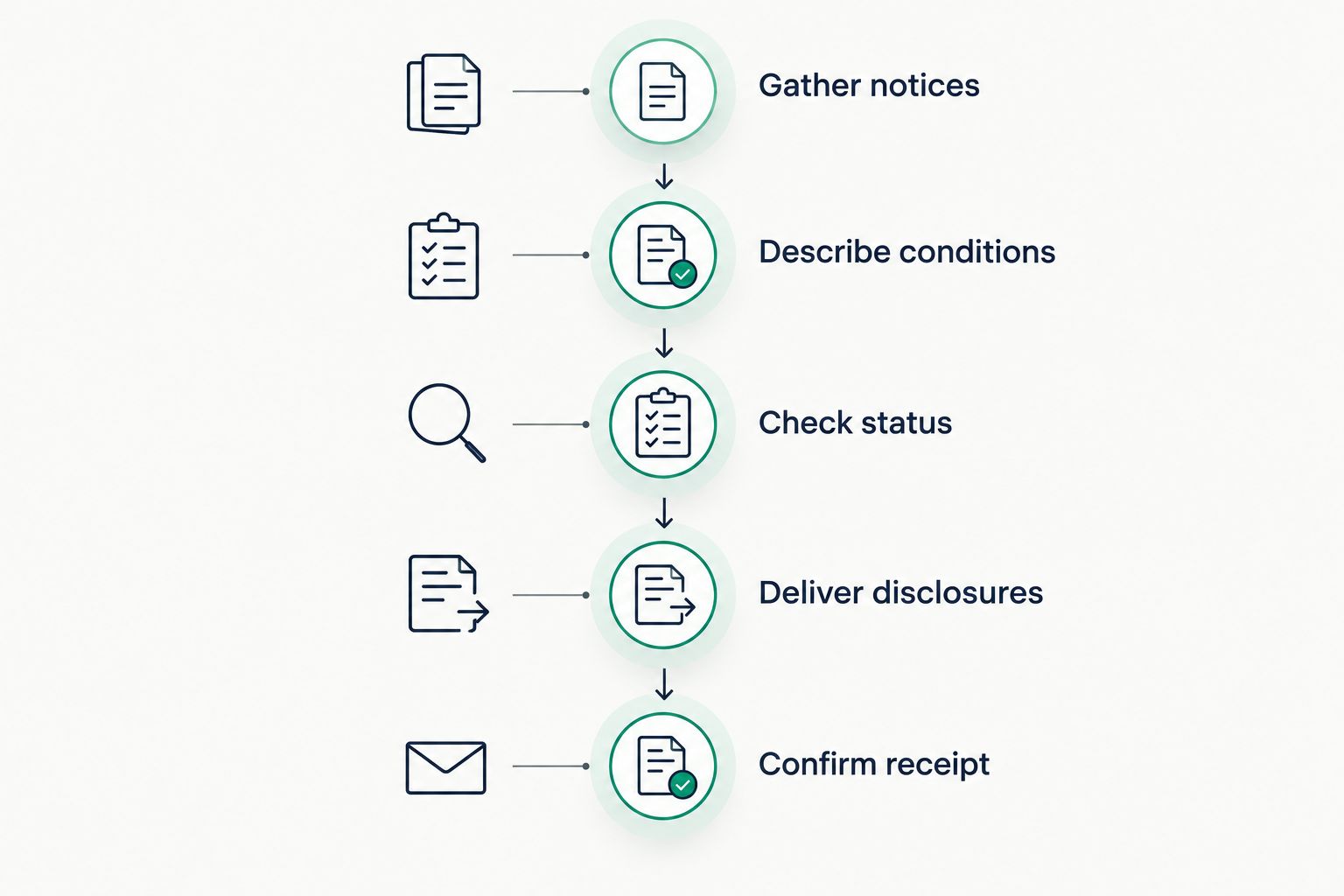
Start with these steps. Our guide to selling a house with code violations also explains the broader sale decision.
- Gather notices. Collect violation letters, inspection reports, correction orders, hearing notices, and correspondence with the enforcement office.
- Describe conditions. Identify the problem behind each notice, such as unpermitted work, unsafe wiring, or a damaged structure. Separate confirmed findings from your assumptions.
- Check status. Ask the issuing office whether the case remains open, what compliance requires, and whether penalties or transfer restrictions apply.
- Deliver disclosures. Complete the forms required for your transaction and provide relevant attachments through the process your local professional recommends.
- Confirm receipt. Keep a dated copy of what you delivered. Address any later changes before closing through the required update process.
Why this matters
A buyer needs to understand both the physical problem and the government's response to it. A damaged railing is a condition; a correction order creates a separate issue that the sale documents must address.
For your 2026 sale, distinguish what the buyer agrees to accept from what the issuing authority requires. A contract between buyer and seller does not, by itself, bind the enforcement office or release an existing obligation.
This article provides general information, not legal, tax, or financial advice. Ask a local real estate attorney about your disclosure duties, especially when the property has an active order, disputed ownership, or a deadline tied to enforcement.
What information belongs in your disclosure?
The underlying property condition
Describe the actual problem in plain language. If a notice identifies work completed without a permit, disclose that issue rather than reducing it to a vague reference to paperwork.
Do not diagnose something you cannot verify. State what you observed, what the notice says, and what a qualified inspector or contractor documented. If those sources disagree, provide the records instead of choosing the most favorable description.
The notice and its current status
Identify the issuing department, the property involved, and the notice or case reference shown on the document. Include the notice itself when your transaction process permits or requires it.
Explain whether you know the case is open, corrected but awaiting inspection, disputed, or formally closed. Repair completion and official case closure are different facts. Do not mark an issue resolved solely because someone performed the work.
Orders, deadlines, and enforcement correspondence
Provide known correction orders, hearing notices, and other communications relevant to the property. Include amendments or extensions so the buyer does not rely on an outdated document.
If a notice includes a deadline, do not assume that signing a sale contract extends it. Ask the issuing office or your attorney what remains due while the transaction is pending.
Known penalties and recorded claims
Disclose known fines, assessments, or liens as required, and provide supporting records. A lien is a legal claim against property that can affect its transfer or the distribution of sale proceeds.
Ask the closing professional to investigate recorded claims and obtain any required payoff or release information. Separately confirm the enforcement case with the issuing office; a title review and a code-status inquiry serve different purposes.
Can I sell as-is instead of fixing the violations?
An as-is sale can allocate repair responsibility to the buyer through the contract, but it does not automatically authorize a transfer that local rules restrict. Confirm that the property can transfer in its current condition before treating an accepted offer as a workable closing plan.
These are different sale approaches, not interchangeable promises:
| Approach | Best for | Main advantage | Main limitation |
|---|---|---|---|
| Repair before selling | Owners able to manage corrective work | Can resolve identified conditions before buyer review | Requires coordinating work, permits, and any required inspections |
| Sell as-is | Owners who want to avoid preparing the home for sale | Lets you negotiate a sale around the property's current condition | Buyer terms can reflect repair and enforcement risk; disclosure duties remain |
| Negotiate a documented compliance plan | Transactions where the authority permits unresolved items at transfer | Clarifies who handles approved outstanding requirements | Requires specific written terms and any necessary official approval |
A successful open-market sale can produce a different outcome from an as-is cash offer. An as-is cash offer may be lower because the buyer takes on repair work and uncertainty. Compare the obligations you retain, not just the headline offer.
Why disclosure requirements vary
There is no nationwide seller-disclosure answer that replaces a location-specific review. For a 2026 transaction, use the current requirements that apply to the property and sale.
- State disclosure law. States differ in required forms, covered defects, exemptions, and delivery procedures.
- Local enforcement rules. The issuing authority determines its compliance process and any applicable transfer requirements.
- Violation status. An open complaint, an issued order, and a formally closed case describe different stages.
- Recorded claims. A recorded lien creates a title issue beyond the physical repair itself.
- Ownership authority. An estate or another ownership arrangement can affect who signs and what transaction requirements apply.
- Contract terms. Inspection rights, disclosure acknowledgments, repair agreements, and cancellation provisions affect the parties' responsibilities.
An exemption from a particular disclosure form is not a reason to assume that concealing a known problem is permitted. Have a local attorney explain the exemption's actual scope before relying on it.
What should I do if I disagree with the violation?
Disclose the notice and explain that you dispute it. Provide the notice, your response, and any written decision or supporting report rather than presenting the dispute as already resolved.
Keep disagreement separate from status. Unless the issuing authority confirms otherwise, do not assume that an appeal, a contractor's opinion, or your planned sale suspends an order or deadline.
If the dispute affects whether the property can transfer, obtain local legal advice before committing to a closing date. The buyer's willingness to proceed does not answer that question.
Do I need to disclose a violation that I already repaired?
A repair does not necessarily erase the disclosure requirement. The applicable form or law can ask about past conditions, permits, repairs, or notices, so answer the actual question rather than only reporting today's appearance.
Keep repair invoices, permit records, inspection results, and any written closure notice. If the work is complete but the enforcement office has not closed the case, describe both facts accurately.
For documents you receive during a 2026 sale, preserve the issue date and delivery record. That helps distinguish what you knew when you first disclosed the problem from information received later.
Can the buyer take responsibility for open violations?
A buyer can agree to perform work or accept specified obligations, subject to applicable law and the authority's requirements. That agreement does not automatically release you from obligations owed to the government or remove a recorded claim.
Have the contract identify the outstanding items, who must act, what approvals are needed, and what happens if a required approval is denied. Avoid relying on a verbal promise that the buyer will handle everything.
Before signing, ask:
- Does the authority permit this property to transfer with the case open?
- Is a buyer acknowledgment, compliance agreement, or other approval required?
- Which obligations remain yours after closing?
- What proof will establish completion or release?
- What happens if the transaction does not close?
How should I compare an as-is offer?
Start with the written obligations. An offer is not clear until you understand inspections, repair expectations, closing conditions, and responsibility for unresolved claims.
Polus Acquisitions Group fits homeowners seeking an as-is cash-offer review without preparing the home for a listing. At Polus Acquisitions Group, we offer a free, no-obligation review, and you retain the choice to accept or decline.
We do not require repairs, cleaning, staging, or an agent listing. Our stated terms include no agent commissions or listing fees and coverage of standard closing costs, subject to the actual written offer. Those terms do not mean your mortgage balance, taxes, liens, or every seller expense disappears.
The trade-off is convenience versus the outcome another sale route might achieve. Our offers remain subject to inspection and transaction requirements. Review any proposed changes before agreeing, and discuss a closing date that fits the property's actual title and compliance situation.
If a proposed arrangement is not a cash purchase, ask for a plain explanation of its payment terms, ongoing obligations, and risks. Do not evaluate it as though cash will simply pay off every existing obligation at closing.
Understand your as-is offer
Request a free cash-offer review. You choose whether to accept or decline.
FAQ
Do I have to disclose open code violations if the buyer pays cash?
A cash purchase does not automatically remove seller-disclosure duties. Follow the state and local rules that apply, and disclose known conditions and enforcement information as required.
Does selling a house as-is mean I can leave violations out of the disclosure?
Selling as-is does not automatically let you omit known violations. As-is terms address the property’s condition and contractual responsibilities, not a blanket exemption from disclosure law.
What if I lost the original code violation notice?
Ask the issuing department for a copy and the current case status. Do not describe the property as violation-free simply because you no longer have the paperwork.
Can I close while a code enforcement case is still open?
Closing with an open case depends on local transfer rules, title issues, and the transaction requirements. Confirm those points with the issuing office and your closing professional before committing to a date.
Will the sale automatically remove code enforcement fines or liens?
A sale does not automatically remove fines or liens. Your closing professional and local attorney should determine what must be paid, released, or otherwise addressed.
Do I need to disclose violations on an inherited house I never lived in?
Not living in the house does not by itself answer your disclosure obligations. Estate-related exemptions and knowledge requirements vary, so ask a local attorney which rules apply to your role and transaction.
Will Polus Acquisitions Group consider a house with open violations?
Polus Acquisitions Group offers an as-is cash-offer review for homes in any condition. Provide the violation records so we can discuss the property; offers remain subject to inspection and transaction requirements.
One last thing
A repaired house and a closed enforcement case are not the same thing. Before your 2026 closing, ask for written confirmation of the case status and keep it with your sale records.
If the case remains open, make sure the buyer's documents describe that accurately. Clear records give both sides a better basis for deciding whether the transaction works.


Leave a Reply