
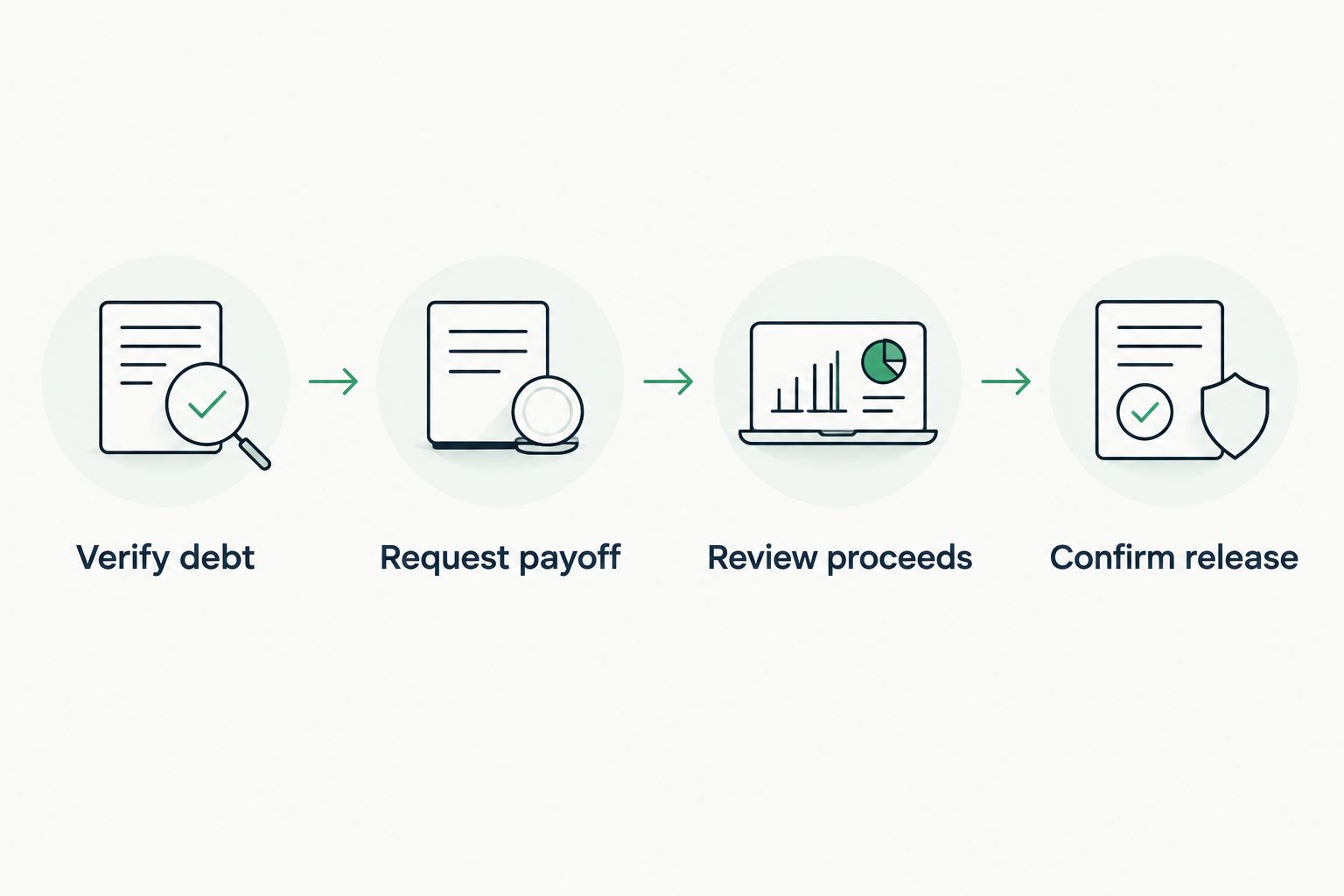
Instead of chasing tax balances and closing documents separately, use a single payoff-to-closing workflow to sell a house with a property tax lien: verify the debt, obtain written payoff instructions, and have the closing professional arrange payment and the required release. You can often pay the lien from sale proceeds, but the transaction must satisfy title requirements and any applicable tax-sale deadlines.
- To sell house with property tax lien issues, confirm the payoff and release requirements before committing to closing.
- Polus Acquisitions Group offers an as-is sale option; a cash purchase does not erase property tax debt.
- Have the closing professional account for tax liens, mortgage payoff, and seller obligations before estimating your proceeds.
- A pending sale does not automatically pause a tax auction or extend a redemption deadline.
Why this matters
A tax bill shows what was billed. A payoff statement identifies what must be paid through a specified date. A title review identifies recorded claims and the requirements for transferring ownership. These documents serve different purposes; none substitutes for the others.
Polus Acquisitions Group is a fit for homeowners seeking an as-is home sale without preparing the property for a listing. That convenience does not remove the need to resolve title problems or understand the written offer. You can learn about Polus Acquisitions Group while keeping the payoff process separate from your decision about the buyer.
For a 2026 sale, build your closing plan around current written information, not an old balance or a verbal estimate. This article provides general information, not legal, tax, or financial advice. State and local procedures differ.
Before you start
- Collect property and ownership records. Have the property address, parcel number, latest tax notices, mortgage statements, and documents showing who can sign. Tell the closing professional about an estate, divorce, trust, or power of attorney immediately.
- Identify the people handling payment and title. You need the relevant tax collection office and the title company, escrow officer, or closing attorney handling the sale. Ask who orders payoffs, sends funds, and confirms the lien's release.
- Check for the non-obvious problem: a transferred tax claim. If the delinquency has entered a tax-certificate or tax-sale process, an ordinary tax bill might not establish the full redemption amount or correct payee. Confirm the current procedure before sending money.
Do not wait for a buyer's inspection to check a tax-sale deadline. If a sale or redemption deadline is approaching, contact the responsible office and a qualified local attorney immediately. A purchase contract alone does not protect ownership.
Tax account verification
Establish the debt and its status
- Match the property. Use the parcel number and legal description, not just the mailing address. Ask whether separate parcels or assessments affect the transaction.
- Request the current account history. Identify unpaid tax periods, penalties, interest, collection charges, and payments already credited. Ask whether separate municipal charges require separate inquiries.
- Confirm the enforcement stage. Ask whether the account is delinquent, subject to a recorded lien, included in a tax-certificate process, or scheduled for a tax sale. Have the office explain the applicable deadline and payment method.
- Send the records to the closing professional. Include every notice, including one you believe is mistaken. Ask for a title review rather than assuming the tax account lists every claim against the property.
Expected result: Your file identifies the correct property, the responsible collection authority, and the next enforcement deadline, if one applies. Unanswered questions belong on a written follow-up list.
Keep the original notices. A demand arriving during your 2026 transaction might concern a different period or charge than the balance already discussed, so compare the parcel, account, and tax period before treating it as a duplicate.
Payoff and release requirements
Obtain closing-ready instructions
- Request a written payoff or redemption statement. Tell the responsible office or authorized party the proposed payment date. Ask what amount satisfies the claim through that date and what happens if payment arrives later.
- Verify the recipient and payment method. Give the instructions to your closing professional. Independently verify any changed wiring instructions using a previously verified telephone number, not contact information supplied in the change message.
- Ask how the lien is cleared. Depending on local procedures, the closing professional may need a recorded release, satisfaction, certificate, or other evidence. Ask who obtains it and what evidence is needed to close.
- Check every related payoff. A property tax payoff does not pay your mortgage or clear an unrelated judgment. Have the closing professional identify the separate items that must be addressed.
Expected result: The closing file contains dated payment instructions and an agreed process for documenting satisfaction. A screenshot of an online balance is not the same as closing-ready instructions.
Do not describe an installment agreement as a lien release unless the responsible authority confirms that result. If you are already making payments, provide the agreement and payment history so the closing professional can reconcile them with the requested payoff.
The workflow is straightforward, but its order matters: identify the claim before requesting payment instructions, and understand those instructions before deciding whether the sale works financially.
Sale terms and proceeds
Review proceeds before choosing a sale route
- Request an estimated settlement statement. Have the closing professional show the tax payoff, mortgage payoff, other required payments, applicable closing charges, and the resulting seller proceeds. Estimates remain subject to updated figures.
- Separate buyer benefits from debt obligations. Polus Acquisitions Group describes an as-is purchase without agent commissions or listing fees and covers standard closing costs, subject to the written offer. Mortgage balances, taxes, liens, and other seller obligations do not disappear under those terms.
- Check inspection and transaction conditions. Offers remain subject to inspection and transaction requirements. Read the provisions covering changes, termination, possession, and the proposed closing date.
- Resolve any shortfall before committing. If proceeds will not cover required payments, discuss the gap with the closing professional and a qualified adviser. Do not assume the buyer, lender, or tax authority will absorb it.
Expected result: You understand the estimated amount you would receive, the obligations being paid, and the conditions that remain. Compare complete written terms rather than a headline offer alone.
Compare the routes available to you
For a 2026 decision, compare property preparation, sale conditions, and expected proceeds. No route automatically clears a property tax lien.
| Sale route | Best for | Advantage | Trade-off |
|---|---|---|---|
| As-is direct cash sale | Homeowners prioritizing a sale without listing preparation | Avoids preparing the home for a listing | An as-is cash offer may be lower than a successful open-market sale |
| Open-market listing | Homeowners willing to manage marketing and buyer negotiations | Exposes the property to competing buyers | Showings, financing conditions, preparation decisions, and timing require management |
| Pay the lien before selling | Homeowners able to fund the payoff independently | Addresses the tax claim before the sale | Requires funds before receiving sale proceeds and confirmation that the claim is cleared |
An as-is sale describes property condition. A cash sale describes the buyer's financing. Neither term means the seller's debts are forgiven.
Closing payment and confirmation
Complete the transfer without losing the paperwork
- Refresh date-sensitive amounts. Before signing, have the closing professional confirm that tax and mortgage payoff figures cover the actual disbursement date. A rescheduled signing can require updated instructions.
- Review the final settlement statement. Match each required payment to its recipient and supporting payoff. Ask about unexplained deductions before authorizing disbursement.
- Confirm the payment and release process. Establish who sends the money, tracks receipt, and obtains the evidence required to clear the lien. Recording and disbursement procedures vary by jurisdiction.
- Keep the final records. Save the signed settlement statement, payoff correspondence, payment confirmation, and release or other satisfaction evidence. Ask how you will receive documents completed after closing.
Expected result: You have a record of what was paid and who is responsible for any remaining documentation. Signing the deed is not, by itself, proof that the tax account was credited correctly.
If someone signs for an owner, address that authority before documents are prepared. Requirements for selling with a power of attorney depend on the jurisdiction, the document, and transaction requirements; the linked discussion concerns Nevada, not a nationwide rule. Have the closing professional review the actual document early.
When the balance or closing date changes
A changed date requires a payoff check, not just a calendar update. Tell the closing professional whenever the proposed disbursement date moves, including a move within 2026. Ask whether the existing statement remains valid and whether the payment method still meets the deadline.
Use the same update workflow when a new notice arrives:
- Send the notice to the closing professional and identify the parcel and account.
- Ask the responsible authority whether the charge is already included in the payoff.
- Obtain revised written figures when needed and review the updated settlement statement.
If you pay the tax claim before closing, send the receipt immediately. Ask the closing professional to confirm the credit and required release evidence so the settlement statement does not pay the same obligation again.
Do not subtract a payment from the payoff yourself. Payment allocation, accrued charges, and processing status need confirmation from the party maintaining the account.
Troubleshooting
The payoff exceeds the tax bill
Ask for an itemized explanation showing the tax periods, penalties, interest, and collection charges. Reconcile payments already made. An older bill does not establish the current payoff, but you should understand every component before authorizing payment.
The proceeds do not cover required payments
Pause before agreeing to a closing date. Ask the closing professional to identify the exact shortfall and unresolved claims. Any proposed reduced payoff, outside contribution, or different purchase arrangement requires its own written terms; a non-cash arrangement is not a cash purchase.
A tax auction is approaching
Contact the responsible authority and a qualified local attorney about the actual deadline and available procedures. Do not rely on the buyer's proposed closing date or assume negotiations stop enforcement. A pending 2026 transaction does not establish that an auction has been postponed.
The tax account still shows a balance after closing
Compare the account with the settlement statement and payment confirmation. Ask the closing professional to trace the payment, then request an explanation from the collection office. Determine whether the balance reflects an uncredited payment, a separate charge, or another tax period.
Customize your workflow
Add property-specific issues to the same closing file. An inherited home requires confirmation of signing authority; an occupied rental requires attention to possession and tenant obligations. A mortgage adds a separate payoff. None should remain an informal side conversation.
If you want an as-is offer from Polus Acquisitions Group, you can book a conversation and explain the property's condition, tax notices, and timing concerns. Requesting an offer does not obligate you to sell. Discuss a closing date that reflects the actual title and transaction requirements.
Understand your as-is sale option
Discuss the property and tax notices. Requesting an offer does not obligate you to sell.
FAQ
Can I sell my house with a property tax lien?
You can often sell a house with a property tax lien if the transaction satisfies the applicable payoff and title requirements. Have the closing professional confirm the payment and release process before committing to a closing date.
Can unpaid property taxes be paid from the sale proceeds?
Unpaid property taxes can often be paid from sale proceeds through the closing process. The proceeds must cover the required payments, or another documented solution must be arranged before closing.
Does a cash buyer take away my property tax debt?
A cash purchase does not erase property tax debt. The settlement arrangements must address the claim, and the written agreement should explain which costs each party pays.
Do I need to repair the house before requesting an offer?
Polus Acquisitions Group offers an as-is purchase option without repairs, cleaning, or staging. Offers remain subject to inspection and transaction requirements, and requesting an offer does not obligate you to accept.
Will signing a purchase contract stop a tax sale?
Signing a purchase contract does not automatically stop a tax sale. Confirm the enforcement deadline with the responsible authority and seek qualified local legal help if ownership is at risk.
What happens if my closing date changes?
A changed closing date requires confirmation that the payoff remains valid through the actual payment date. Ask the closing professional to obtain updated instructions and revise the settlement statement when necessary.
What proof should I keep after the tax lien is paid?
Keep the final settlement statement, payment confirmation, and the release or other evidence required by local procedures. Ask the closing professional who obtains that evidence and how you will receive it.
One last thing
Ask who confirms the lien is cleared, not just who sends the payment. Put that responsibility in your closing file before signing. It closes the gap between money leaving escrow and the records showing that the claim has been satisfied.


Leave a Reply