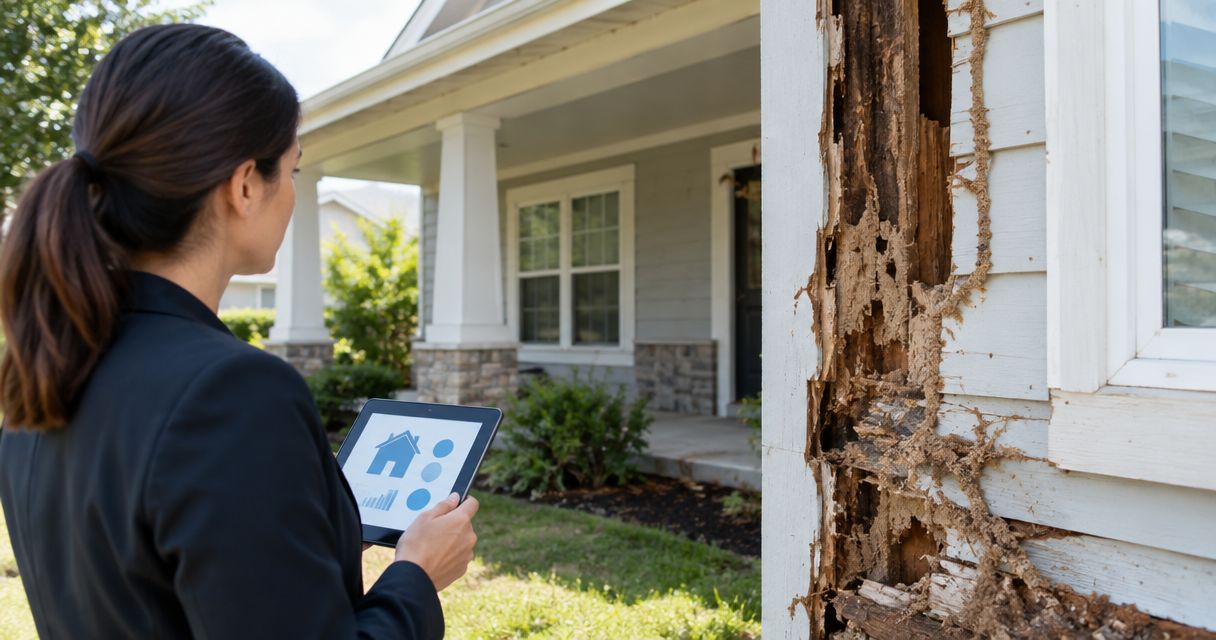
Best for avoiding listing preparation: an as-is cash-offer review. Best for open-market exposure: an as-is agent listing. Best for addressing documented damage before marketing: treatment and repairs, then listing. To sell a termite-damaged house in 2026, compare these routes by what you would receive after costs and payoffs—not the offer amount alone.
- To sell termite damaged house property as-is, compare written cash offers with an agent’s estimated sale proceeds.
- Polus Acquisitions Group considers as-is purchases; requesting a review does not guarantee an offer or purchase.
- Termite treatment addresses infestation; damaged wood needs a separate assessment.
- Disclose known termite issues as required, and compare inspection conditions before signing.
Why this matters
Termite damage creates separate decisions: whether treatment is needed, whether damaged materials need repair, and how to sell. Completing one does not settle the others. A treatment record does not prove that damaged framing is sound.
At Polus Acquisitions Group, we consider as-is home purchases in Houston, San Antonio, Dallas, and other U.S. markets. You can request a review without repairs, cleaning, staging, or listing preparation.
Polus Acquisitions Group is an as-is sale option for homeowners who want to avoid listing preparation and review written terms before deciding. A direct cash offer may be lower than a successful open-market sale. That trade-off belongs in your comparison from the start.
What makes the best way to sell a termite-damaged house?
Use these criteria for your 2026 decision:
- Preparation required: Decide whether you want to coordinate treatment, repairs, cleaning, and buyer access.
- Estimated proceeds: Compare what remains after selling expenses, required payoffs, and any work you fund.
- Inspection conditions: Identify who can inspect, what happens afterward, and whether the buyer can cancel or request changes.
- Buyer requirements: Ask whether financing, insurance, or repair requirements affect the proposed transaction.
- Ownership and timing: Confirm signing authority, title requirements, and whether the proposed schedule fits your needs.
No route wins every category. Choose the trade-off you can accept, rather than treating the largest proposed amount as a completed sale.
Selling routes at a glance
| Route | Best for | Standout feature | Key limitation |
|---|---|---|---|
| As-is cash-offer review | Avoiding listing preparation | Review an offer without preparing the home for marketing | Offer and closing remain conditional; proceeds may be lower than an open-market sale |
| As-is agent listing | Seeking open-market exposure | Market the property while disclosing its condition | Showings, buyer inspections, and negotiations still require coordination |
| Treatment and repairs, then listing | Addressing documented condition problems | Present completed work with supporting records | You fund and manage work without a guaranteed sale result |
| Owner-managed as-is sale | Keeping direct control of the sale process | Handle inquiries and negotiations yourself | You carry the workload for marketing, screening, and transaction coordination |
1. As-is cash-offer review: best for avoiding listing preparation
An as-is cash-offer review lets you explore selling without first preparing the house for a listing. Share what you know about the termites, damage, treatment history, and access restrictions. Review any written offer before deciding whether its trade-offs work for you.
With Polus Acquisitions Group, requesting a review is free and carries no obligation to accept. We consider properties in any condition, but not every property will receive an offer or be purchased.
As-is cash-offer review pros:
- No repairs, cleaning, or staging required before requesting our review.
- You can assess a written offer before committing to a sale.
- You can compare covered costs and inspection conditions alongside the proposed amount.
As-is cash-offer review cons:
- A direct cash offer may be below a successful open-market sale.
- Inspection, title, ownership authority, and required payoffs still affect closing.
- A preferred closing date is not a guaranteed closing date.
For a Polus Acquisitions Group as-is sale, review the written price, covered costs, inspection conditions, and estimated proceeds. Mortgage balances, taxes, liens, and other obligations may reduce what you receive.
Best for: You want to avoid listing preparation and decide from written terms.
Verdict: Hold off on repairs until you compare an as-is offer with the repair-and-list alternative.
2. As-is agent listing: best for open-market exposure
An as-is agent listing puts the home on the market without promising that you will complete repairs. Your listing should describe known termite issues accurately and follow applicable disclosure requirements. Buyers can still inspect and negotiate under the contract.
Ask the agent to compare the home with sales that reflect its actual condition. A renovated property is not a direct substitute for a house with unresolved damage and an uncertain repair scope.
As-is agent listing pros:
- You seek competing buyer interest through open-market exposure.
- An agent can coordinate marketing, showings, and negotiations.
- You can evaluate offers without first completing a full repair project.
As-is agent listing cons:
- Marketing and showings require access and coordination.
- Financing or inspection requirements can affect a buyer’s ability to proceed.
- Agent compensation and other agreed selling expenses affect proceeds.
Ask how the agent would explain the damage, manage inspection requests, and assess buyer qualifications. “As-is” describes the proposed condition of sale; it does not remove every contractual condition.
Best for: You want market exposure and can accommodate showings and negotiations.
Verdict: Choose an as-is listing when exposure matters more than avoiding the marketing process.
3. Treatment and repairs, then listing: best for resolving known defects
This route separates pest treatment from repair work, completes the appropriate work, and then markets the house. Start with an assessment rather than assuming every damaged area needs the same solution. Where structural safety is in question, obtain an assessment from an appropriately qualified professional.
Keep the treatment findings, repair scope, permits where required, and completion records together. Buyers need to understand what was found and what was done—not just that work occurred.
Treatment and repairs pros:
- You address identified problems before buyer negotiations.
- Written records explain the scope of completed work.
- You can market the home with clearer information about its condition.
Treatment and repairs cons:
- You fund and coordinate work before receiving sale proceeds.
- Opening damaged areas can reveal additional work.
- Completed repairs do not guarantee a particular sale amount or closing date.
Before authorizing work, compare the proposed scope with an as-is sale estimate. Do not assume every expense will return to you at closing.
Best for: You can manage the work and want identified defects addressed before marketing.
Verdict: Wait for written assessments and a proceeds comparison before starting a repair project.
4. Owner-managed as-is sale: best for hands-on control
An owner-managed sale means you handle the marketing and buyer conversations rather than hiring a listing agent. You still need accurate disclosures, a suitable purchase agreement, and closing support appropriate to your jurisdiction.
Separate a buyer’s enthusiasm from the buyer’s ability to complete the transaction. Ask who will purchase, how the purchase will be funded, and what conditions permit cancellation or changes.
Owner-managed as-is sale pros:
- You control the marketing and communication.
- You decide which inquiries and proposed terms to pursue.
- You can present inspection and treatment records directly to buyers.
Owner-managed as-is sale cons:
- You handle inquiries, access, screening, and negotiations.
- Disclosure and contract obligations still apply.
- Avoiding a listing agent does not eliminate other transaction expenses.
Have a qualified local professional explain terms you do not understand. Direct control is useful only when you can also manage the responsibilities.
Best for: You have the time and confidence to coordinate a sale yourself.
Verdict: Skip this route if managing buyers and paperwork is the work you want to avoid.
How these routes are ranked
This 2026 ranking puts preparation burden first, followed by estimated proceeds, inspection conditions, buyer requirements, and transaction readiness. It ranks selling routes by use case, not by a claimed universal financial winner.
Start with an as-is comparison if your priority is avoiding work. Start with an agent’s assessment if your priority is testing open-market interest. Treatment and repairs belong first only when you choose that work with its scope and financial trade-offs understood.
Separate infestation from damage before choosing work
A termite inspection and a structural assessment answer 2 different questions: whether termite activity needs attention and whether damaged materials need repair. Ask each professional to identify the limits of the assessment in writing.
Treatment methods depend on the termite type and the property findings. Comparing drywood termite treatment options does not establish that drywood termites caused your damage, or that treating them repairs affected wood. Get the diagnosis before choosing the work.
Keep 3 records together when available: the inspection report, the treatment record, and the repair assessment. If a record does not exist, describe what you actually know rather than presenting an assumption as a completed inspection.
Do not remove or cover damaged materials merely to make the house photograph better. Preserve relevant documentation, and get safety guidance before entering areas with suspected structural damage.
Compare written terms in 3 steps
Use the same information for every route in your 2026 comparison. Otherwise, you risk comparing a conditional offer with an optimistic listing estimate that excludes preparation or selling expenses.
Condition records
Gather existing reports, treatment records, repair estimates, and relevant photographs. Explain whether the issue is confirmed activity, previously treated damage, suspected damage, or an unanswered question. Keep those categories separate.
Written terms
Read the proposed amount alongside inspection rights, cancellation provisions, covered costs, and closing conditions. Ask what happens if an inspection identifies additional damage. A verbal assurance does not replace the purchase agreement.
Estimated proceeds
Request a written estimate of what you would receive after costs and required payoffs. Include any treatment or repair work you would fund before selling. Keep uncertain expenses visible rather than treating them as zero.

A cash purchase and an alternative payment arrangement are not interchangeable. If proposed terms leave a loan in your name or involve payments after ownership changes, ask who owns the home, who pays the loan, what happens after missed payments, and how the arrangement ends. Obtain independent legal review before accepting those terms.
Which selling route should you choose?
Choose an as-is cash-offer review as your starting point if avoiding listing preparation is your main goal. Compare the written result with an agent’s realistic as-is estimate before accepting. You are comparing choices, not committing by asking questions.
For Polus Acquisitions Group, we explain any offer, its conditions, and the estimated proceeds after required payoffs. You can accept or decline without pressure. Closing depends on inspection, title, ownership authority, required payoffs, and other transaction requirements.
Request an as-is sale review
Discuss your property and understand any written offer. Free review. No obligation to accept.
FAQ
Can I sell my house if it has termite damage?
Yes, termite damage does not automatically prevent a sale. The buyer must accept the condition under the contract, and financing, inspection, title, and other transaction requirements still matter.
Do I have to fix termite damage before selling as-is?
An as-is sale does not automatically require you to repair termite damage first. Disclose known issues as required and confirm what the buyer’s contract, lender, and insurer require for the proposed sale.
Do I need to disclose old termite damage that was treated?
Do not assume treatment removes your disclosure obligations. Requirements depend on your jurisdiction and circumstances; give accurate information and ask a qualified local professional which disclosures apply.
Does termite treatment repair damaged wood?
No, termite treatment does not restore damaged wood. Treatment addresses the pest issue; an appropriate repair assessment determines what damaged materials need attention.
Will a cash buyer inspect my termite-damaged house?
A cash buyer can still require an inspection. Read the agreement to understand inspection access, deadlines, cancellation rights, and whether findings can lead to a request for changed terms.
Is repairing termite damage before selling the best choice in 2026?
Repairing before selling is not automatically the best choice in 2026. Compare written work estimates and an agent’s realistic sale assessment with as-is offers, including the preparation and transaction requirements of each route.
Can I sell if my mortgage payoff is larger than the proceeds?
A sale does not erase a mortgage shortfall. Ask your lender and qualified legal or financial advisers about the required payoff and available options before committing to terms you cannot complete.
One last thing
A treatment warranty, a repair invoice, and a structural assessment serve different purposes. Ask what each document actually covers before describing the home as repaired or protected. Clear records are more useful than a broad assurance that the termite problem is “handled.”
Leave a Reply